AI Power Grid 2026: Amazing Future of Global Electricity
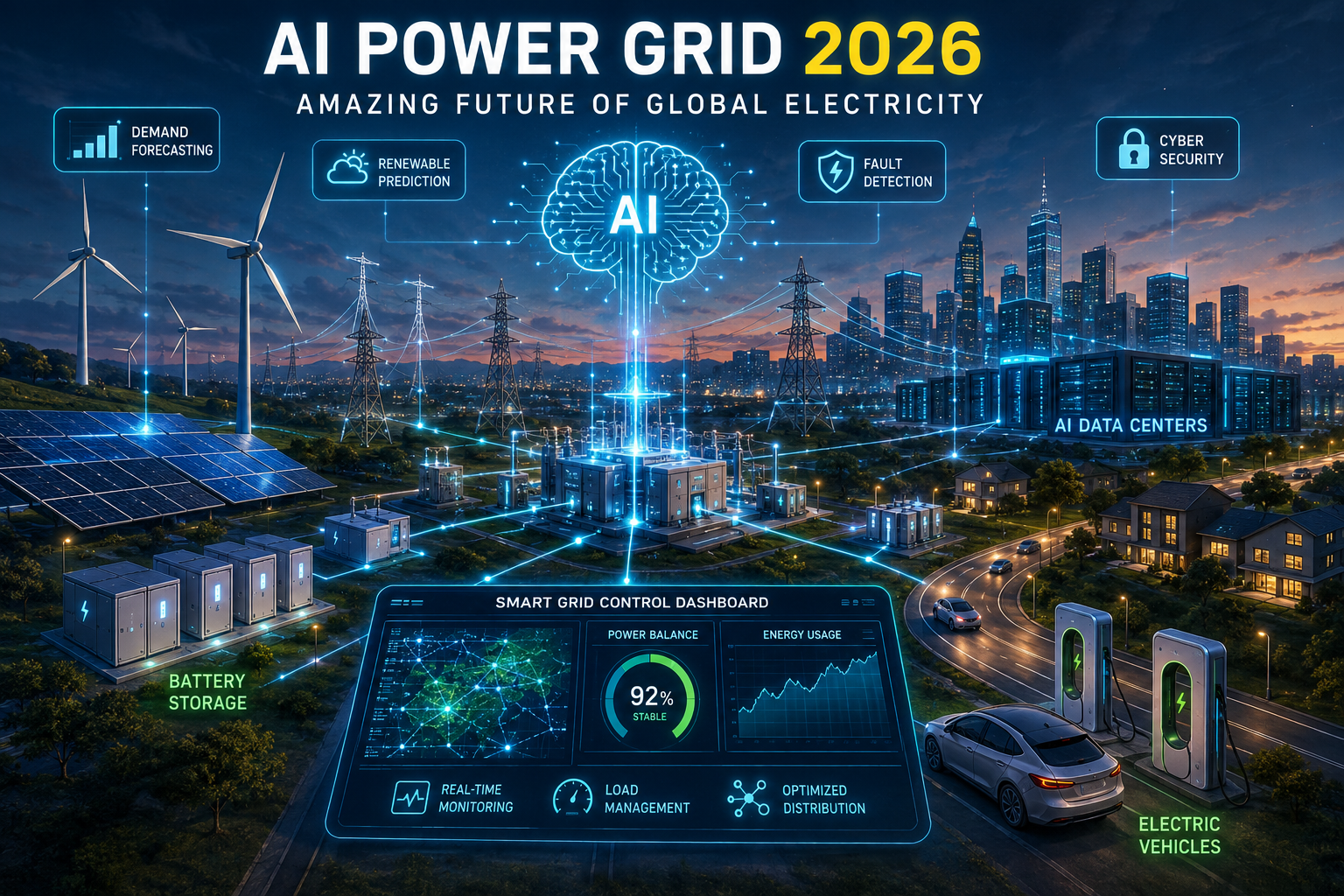
Artificial intelligence is moving beyond software and becoming an important part of the modern energy system. AI Power Grid 2026 is emerging as a powerful technology trend because electricity networks now have to manage growing demand, renewable energy, battery storage, electric vehicles, and large AI data centers. Artificial intelligence can help utilities predict electricity demand, monitor equipment, detect faults, and manage complex power systems more intelligently.
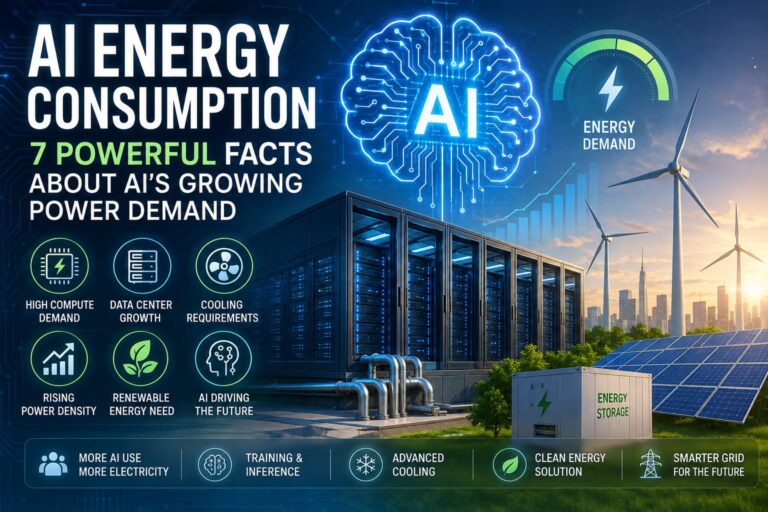
The need for smarter electricity infrastructure is becoming more obvious as data centers consume increasing amounts of power. The International Energy Agency estimates that global data-center electricity consumption was about 415 TWh in 2024 and could reach around 945 TWh by 2030 in its base case.
┌────────────────────────────────────────────────────┐
│ 📋 Table of Contents│
│ │
│ • AI Power Grid 2026 and the New Electricity Era │
│ • AI Electricity Grid Management and Demand │
│ Forecasting │
│ • AI Power Grid 2026 for Renewable Energy │
│ • AI Grid Fault Detection and Predictive │
│ Maintenance │
│ • AI Power Grid 2026: The Numbers Behind Data │
│ Center Growth │
│ • AI Power Grid 2026 Energy Growth Graph │
│ • AI Energy Grid Optimization │
│ • AI Power Grid 2026 and Data Centers │
│ • AI Smart Grid Technology and Battery Storage │
│ • AI Power Grid Monitoring and Cybersecurity │
│ • AI Grid Modernization 2026 │
│ • The Future of AI Power Grid 2026 │
│ • Conclusion │
└────────────────────────────────────────────────────┘
AI Power Grid 2026 and the New Electricity Era
Electricity grids were traditionally designed around relatively predictable patterns. Large power plants generated electricity, transmission networks transported it, and distribution systems delivered it to homes and businesses.
That model is changing.
Solar farms, wind turbines, batteries, electric vehicles, smart meters, industrial facilities, and AI data centers are creating a much more complicated electricity system. Power can now come from many different sources, while electricity demand can change quickly.
AI Power Grid 2026 can help manage this complexity by analyzing huge amounts of information from electricity networks.
AI systems can study data from smart meters, weather forecasts, sensors, substations, renewable-energy facilities, and power equipment. Instead of relying only on fixed rules, utilities can use intelligent models to recognize patterns and support faster decisions.
This makes AI smart grid technology especially interesting for the next generation of electricity infrastructure.
AI Electricity Grid Management and Demand Forecasting
One of the most useful applications of AI Power Grid 2026 is electricity demand forecasting.
Electricity consumption is constantly changing. Hot weather can increase air-conditioning demand, while cold weather can increase heating demand. Electric vehicles, industrial operations, and data centers can create additional changes in electricity use.
AI can analyze historical consumption, weather conditions, seasonal patterns, time of day, and other information to estimate future demand.
AI Grid Forecasting 2026 for Better Electricity Planning
Accurate forecasting allows electricity companies to prepare for changing demand before it happens.
For example, if an AI model predicts unusually high electricity consumption for the following afternoon, grid operators can prepare additional generation or storage resources.
This can help reduce pressure on the electricity network and improve the balance between supply and demand.
The same concept can also be applied to renewable-energy forecasting. AI systems can analyze weather and historical production data to estimate how much electricity solar and wind facilities may generate.
AI Power Grid 2026 for Renewable Energy
Renewable energy is becoming a larger part of electricity systems, but solar and wind power have an important characteristic: their output changes with weather conditions.
Solar panels produce less electricity when sunlight is weak, while wind turbines depend on wind conditions.
This makes AI renewable energy grid technology increasingly valuable.
AI models can analyze weather forecasts, historical production, satellite information, and real-time energy data to predict renewable generation.
AI Renewable Power Forecasting
Better renewable forecasting can help grid operators prepare for changes in electricity supply.
If an AI system predicts lower solar production later in the day, operators may prepare battery storage or other generation resources.
When renewable production is higher than expected, batteries and other flexible resources may be used to absorb some of the excess electricity.
The result could be a more flexible electricity network capable of integrating larger amounts of renewable power.
AI Grid Fault Detection and Predictive Maintenance
Electricity networks contain thousands of important components, including transformers, substations, transmission lines, switches, and other equipment.
A failure in one component can sometimes cause service interruptions or expensive repairs.
AI grid fault detection offers a different approach.
Instead of waiting for equipment to fail, AI can analyze sensor information and identify unusual patterns that may indicate a developing problem.
AI Power Grid Monitoring for Early Warnings
Temperature, vibration, electrical readings, equipment age, and historical performance can provide useful signals.
AI can process these signals and help identify equipment that may require additional inspection.
This approach is known as predictive maintenance.
The benefit is that utilities can potentially discover problems earlier, plan maintenance more efficiently, and reduce unexpected failures.
The IEA has highlighted AI applications for grid fault detection and precise fault location, noting potential reductions in outage duration in suitable applications.
AI Power Grid 2026: The Numbers Behind Data Center Growth
Global data-center electricity consumption is expected to grow significantly. The IEA estimates around 415 TWh of consumption in 2024, rising to approximately 945 TWh by 2030 in its base case.
AI Power Grid 2026 Energy Growth Graph
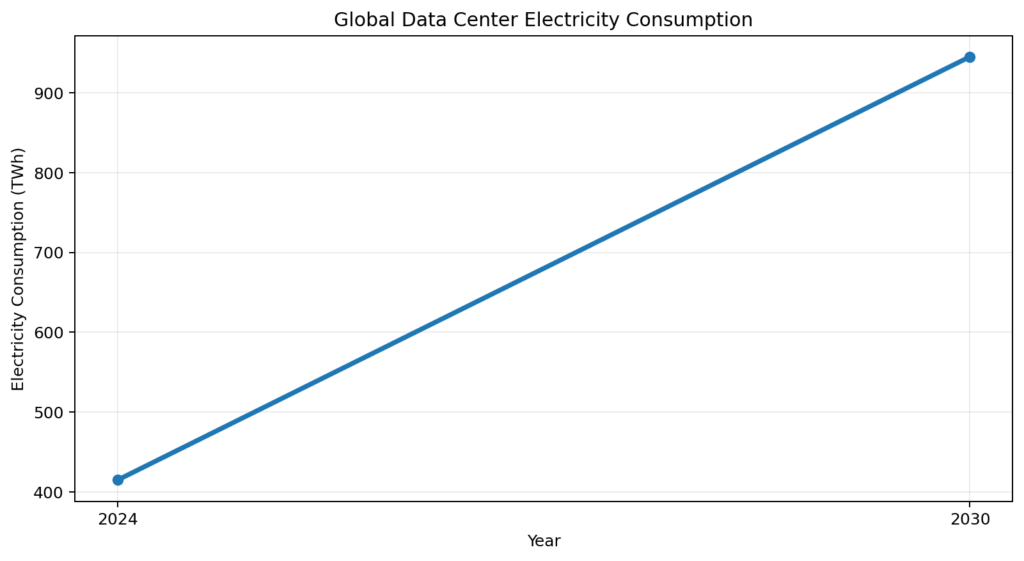
The graph shows the expected growth in global data-center electricity consumption from 2024 to 2030. This growing demand highlights why smarter and more efficient power-grid systems are becoming increasingly important.
AI Energy Grid Optimization
Modern electricity systems produce enormous quantities of data.
Smart meters, power plants, batteries, renewable facilities, substations, and sensors can all provide information about the condition of the grid.
The challenge is understanding that information quickly.
AI energy grid optimization can help turn large datasets into useful predictions and recommendations.
AI systems can identify unusual electricity patterns, forecast demand, analyze equipment conditions, and help determine how available energy resources should be managed.
AI Electricity Demand Forecasting
Demand forecasting becomes especially important when electricity consumption rises rapidly.
Large AI data centers, electric vehicles, industrial equipment, and other technologies can create new electricity loads.
AI-based forecasting can help utilities understand where demand is increasing and when the electricity network may experience pressure.
This can support better planning for new generation, transmission infrastructure, batteries, and substations.
AI Power Grid 2026 and Data Centers
AI is creating an unusual relationship with the electricity grid.
AI needs electricity to operate, but AI can also help manage electricity systems.
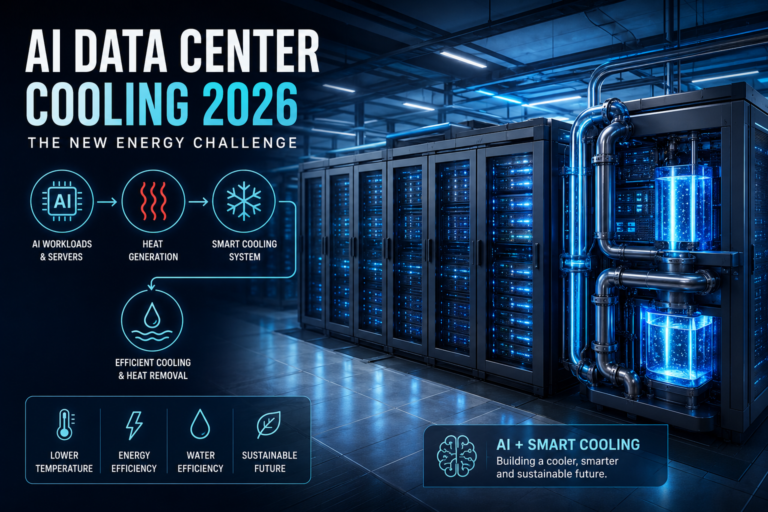
Modern data centers use powerful processors and large computing clusters. Their electricity demand can be concentrated in specific locations, which means local grid capacity can become an important factor when developers choose where to build new facilities.
The source article notes that access to electricity is increasingly becoming a key consideration for AI data-center development.
AI Power Grid Optimization for Data Centers
Future data centers could potentially become more flexible electricity consumers.
Some computing workloads may be scheduled according to electricity availability, renewable-energy production, or grid conditions.
This could allow certain non-urgent computing tasks to run when cleaner or cheaper electricity is available.
That creates an interesting possibility where AI data center power grid management becomes part of a broader smart-energy ecosystem.
AI Smart Grid Technology and Battery Storage
Battery storage is becoming increasingly important as electricity systems add more renewable generation.
Batteries can store electricity when supply is high and release it when demand increases.
AI can make battery management more intelligent.
An AI system can analyze electricity prices, renewable generation, demand forecasts, and grid conditions to determine when batteries should charge or discharge.
AI Energy Management System
An AI energy management system could coordinate multiple resources instead of managing each component separately.
For example, an intelligent system could monitor solar generation, battery capacity, electricity demand, and grid conditions at the same time.
This could help create a more responsive energy network.
AI Power Grid Monitoring and Cybersecurity
A smarter electricity network also creates new cybersecurity challenges.
When electricity infrastructure becomes connected to sensors, software, cloud platforms, and AI systems, more digital systems need protection.
A cyberattack or incorrect data could potentially affect grid operations.
For this reason, AI Power Grid 2026 will need to develop alongside strong cybersecurity systems.
Utilities will need secure communications, controlled access, continuous monitoring, reliable data, and human oversight.
AI should improve electricity-grid resilience rather than create additional risks.
AI Grid Modernization 2026
Many electricity networks contain infrastructure that was designed decades ago.
Modernizing these systems is therefore an important part of the transition toward smarter grids.
AI grid modernization 2026 is not simply about installing artificial intelligence. It also involves upgrading sensors, communication networks, substations, transmission infrastructure, energy storage, and data systems.
The combination of modern hardware and intelligent software can create a stronger foundation for future electricity demand.
AI Power Grid 2026 and Human Operators
Artificial intelligence will not necessarily replace electricity-grid professionals.
Electricity is critical infrastructure, and major decisions can affect homes, businesses, hospitals, transportation, and entire communities.
A practical approach is to use AI as decision support.
AI can analyze large quantities of information and identify possible problems, while trained human operators remain responsible for important decisions.
This combination can provide the advantages of automation while maintaining human oversight.
AI Power Grid 2026: The Numbers Behind Data Center Growth
The growth of data-center electricity consumption helps explain why smarter power infrastructure is becoming increasingly important.
The IEA estimates global data-center electricity consumption at approximately 415 TWh in 2024 and projects around 945 TWh by 2030 in its base case.
AI Power Grid 2026 Energy Growth Graph
The following graph visualizes the increase in global data-center electricity consumption:
2024: 415 TWh → 2030: 945 TWh
[Insert graph: AI Power Grid 2026 Energy Growth]
This data represents overall data-center electricity consumption rather than AI alone. However, the growth of AI workloads is an important factor in the increasing demand for computing infrastructure and electricity.
AI Power Grid 2026 and the Future of Smart Electricity
The future electricity network could become much more predictive and responsive.
Instead of waiting for equipment failures or sudden demand changes, AI systems could continuously monitor grid conditions and provide early warnings.
Renewable-energy forecasts could become more accurate. Batteries could respond to changing conditions. Data-center workloads could potentially become more flexible. Maintenance teams could receive early warnings about equipment problems.
This would turn the electricity network into a more connected and intelligent system.
The Future of AI Power Grid 2026
The future of AI Power Grid 2026 will likely involve several technologies working together.
Artificial intelligence could connect with renewable energy, battery storage, smart meters, electric vehicles, data centers, transmission systems, and advanced sensors.
The biggest opportunity is not simply using more AI. It is using AI to make the entire electricity system more efficient, flexible, and reliable.
The electricity grid of the future may therefore become a combination of physical infrastructure and intelligent digital systems.
As AI workloads continue growing, electricity availability could become an increasingly important factor in technology development. At the same time, AI can help utilities manage increasingly complex electricity networks.
Conclusion
AI Power Grid 2026 is changing the way people think about the relationship between artificial intelligence and electricity.
AI can support AI electricity grid management, demand forecasting, renewable-energy integration, AI grid fault detection, predictive maintenance, battery management, and intelligent power monitoring.
The growth of data centers and other electricity-intensive technologies makes smarter grids increasingly important. At the same time, artificial intelligence can become part of the solution by helping utilities analyze information and respond to changing conditions more quickly.
The future of electricity will not depend only on generating more power. It will also depend on using existing infrastructure more intelligently.
That is why AI Power Grid 2026 could become an important technology trend as the world moves toward a more connected, renewable, and intelligent electricity system.