AI Gigawatt Data Centers: 7 Powerful Facts Shaping AI’s Future
AI Gigawatt Data Centers are becoming an important part of the rapidly growing artificial intelligence industry. As AI models become larger and more powerful, the computing infrastructure behind them is also being expanded. These facilities can require enormous amounts of electricity, with some planned campuses approaching gigawatt-scale power needs. This growing demand is changing how data centers are designed, powered, cooled, and located.
Table of Contents
- What Are AI Gigawatt Data Centers?
- Why Do AI Data Centers Need So Much Power?
- 7 Powerful Facts About AI Gigawatt Data Centers
- AI Data Center Power Demand
- How AI Gigawatt Data Centers Could Shape the Energy Industry
- Frequently Asked Questions
- Conclusion
What Are AI Gigawatt Data Centers?
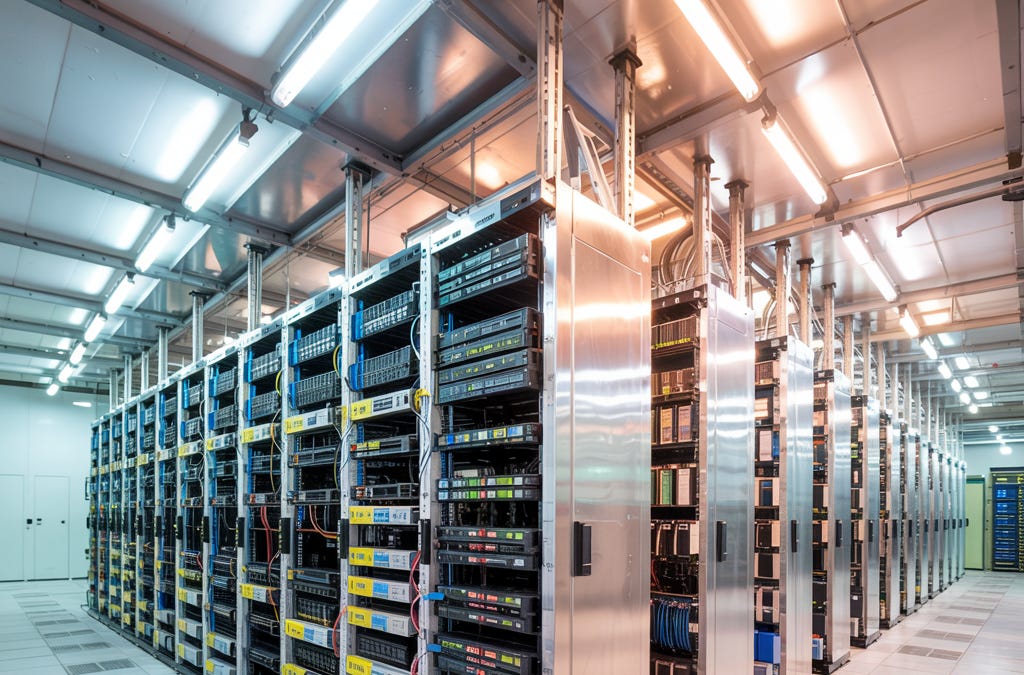
AI Gigawatt Data Centers are large computing facilities designed primarily to support demanding artificial intelligence workloads. A gigawatt equals 1,000 megawatts, so gigawatt-scale facilities represent an extremely large electricity requirement.
Unlike conventional data centers, AI-focused facilities are being designed around high-performance processors, advanced networking equipment, large storage systems, and sophisticated cooling infrastructure. When thousands of AI processors operate together, the total electricity requirement can become enormous.
The term “gigawatt data center” does not necessarily mean that every facility consumes one gigawatt continuously. It can also refer to a large campus or collection of facilities being developed around gigawatt-scale power capacity.
Why Do AI Data Centers Need So Much Power?
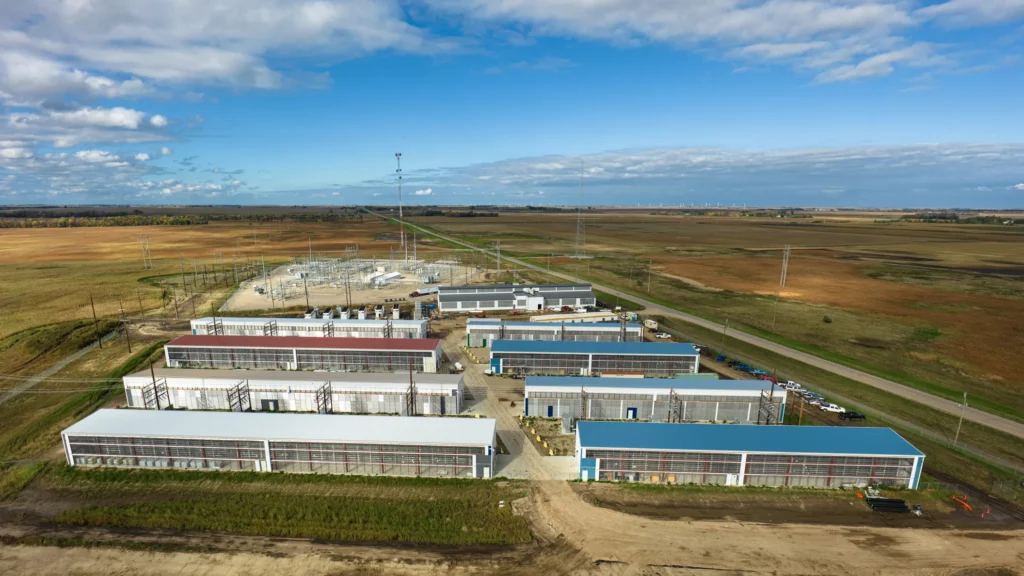
Artificial intelligence depends on intensive computing. Training and running advanced AI models requires large numbers of specialized processors to perform calculations continuously.
However, the processors are not the only source of electricity demand. Power is also required for:
- Cooling systems
- Networking equipment
- Storage systems
- Backup infrastructure
- Pumps and fans
- Building systems
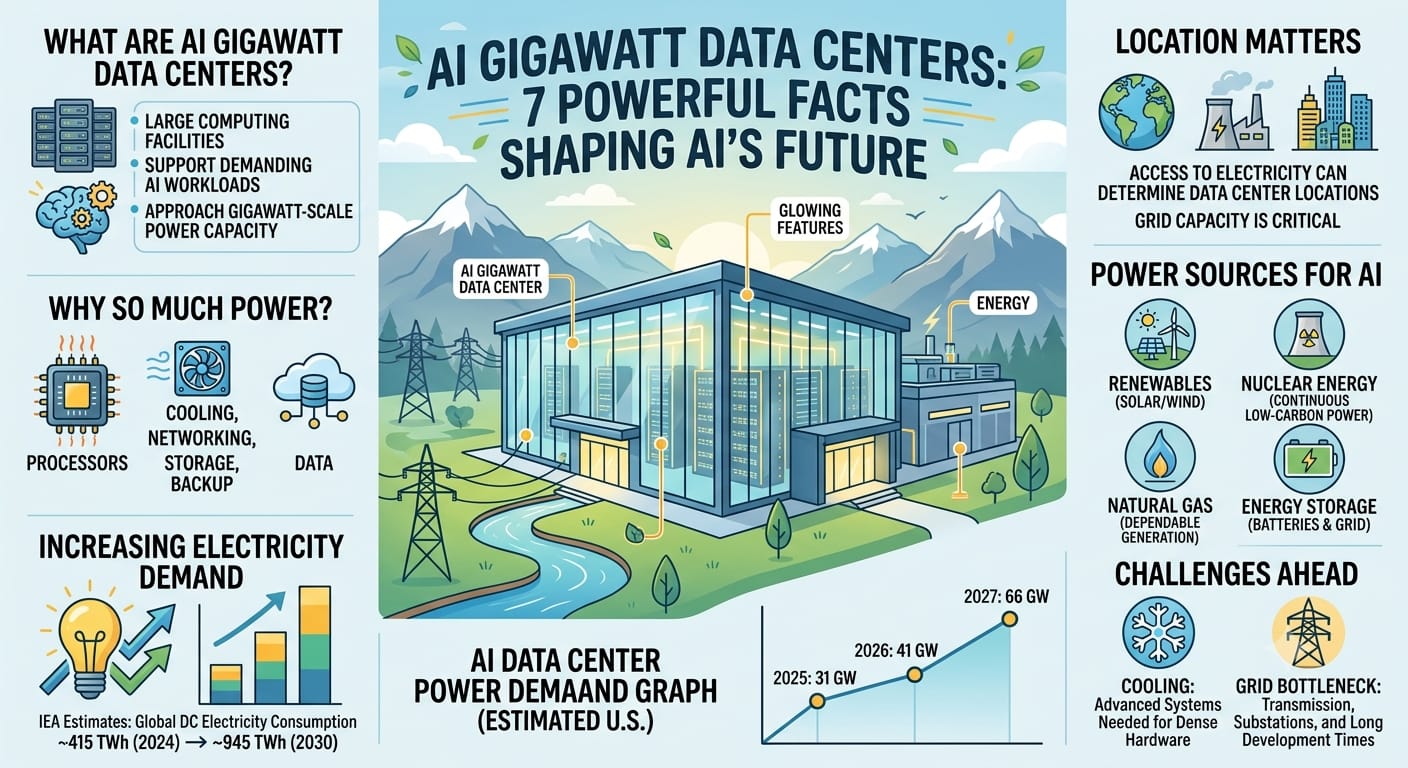
The International Energy Agency estimates that global data-center electricity consumption could reach around 945 TWh by 2030, compared with about 415 TWh in 2024.
This makes electricity availability one of the most important considerations for the future expansion of AI.
7 Powerful Facts About AI Gigawatt Data Centers
1. AI Is Increasing Data Center Electricity Demand
The first major fact about AI Gigawatt Data Centers is the speed at which electricity demand is growing.
AI workloads are becoming more computationally demanding, while adoption is expanding across businesses, research, cloud computing, robotics, and other industries.
The IEA expects global data-center electricity consumption to more than double between 2024 and 2030. Accelerated servers, which are heavily associated with AI workloads, are expected to be a major contributor to this increase.
This means that AI growth is increasingly connected to the growth of the electricity industry.
2. Gigawatt-Scale AI Projects Are Becoming Possible
The scale of AI infrastructure is changing quickly.
Large technology companies and infrastructure developers are planning increasingly powerful computing campuses. Instead of operating a relatively small collection of servers, these facilities can contain enormous numbers of processors working together.
A gigawatt represents 1,000 MW of capacity, which gives an idea of how significant these projects can become.
The growing scale is also creating demand for companies that provide electricity generation, grid equipment, cooling systems, batteries, and other infrastructure.
3. Power Availability Can Determine Data Center Locations
For years, data centers were commonly located according to factors such as land availability, internet connectivity, taxes, and proximity to customers.
For AI Gigawatt Data Centers, access to electricity is becoming equally important.
A location may have enough land for a massive facility but still be unsuitable if sufficient electricity cannot be delivered. New transmission lines, substations, and generation capacity can require years of planning and construction.
As a result, future AI facilities may increasingly be developed in areas where large amounts of electricity are already available.
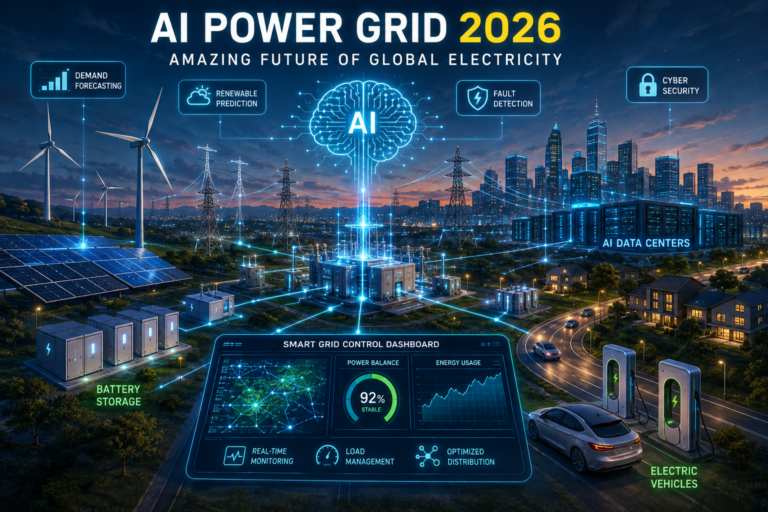
4. Renewable Energy Could Become a Major Power Source
Renewable energy is expected to play an important role in meeting the growing electricity requirements of AI infrastructure.
Solar and wind projects can provide large amounts of electricity, while batteries can help manage variations in renewable generation.
The IEA expects renewables to provide a significant share of the additional electricity required by data centers through 2030.
For technology companies seeking lower-carbon electricity, large renewable projects could therefore become an increasingly attractive option.
However, renewable energy alone may not always provide continuous power. Grid connections, energy storage, and other generation sources may still be required.
5. Nuclear and Natural Gas Could Support AI Power Demand
Renewables are not the only energy sources being considered for large AI facilities.
Natural gas can provide electricity when it is needed, making it useful for facilities that require dependable power. Nuclear energy is also attracting renewed attention because nuclear plants can provide continuous electricity with relatively low operational carbon emissions.
The IEA expects natural gas to remain important for meeting additional data-center electricity demand, while nuclear generation is also expected to grow later in the decade.
This suggests that future AI Gigawatt Data Centers could use a combination of grid electricity, renewable generation, storage, nuclear power, and other dependable sources.
6. Cooling Is Becoming a Bigger Challenge
Powerful AI processors generate significant heat.
As computing density increases, more advanced cooling systems are required to keep hardware operating safely and efficiently. Traditional air cooling may not be sufficient for every high-density AI environment, which is why liquid cooling and other advanced technologies are receiving greater attention.
Cooling also adds to total electricity consumption.
The IEA estimates that cooling and other infrastructure could account for around 20% of the net increase in global data-center electricity consumption through 2030 in its base case.
Improving cooling efficiency can therefore help reduce the amount of additional electricity required by future AI facilities.
7. The Power Grid Could Become a Major AI Bottleneck
Perhaps the biggest challenge facing AI Gigawatt Data Centers is not the availability of computing technology but the availability of electricity.
AI companies can purchase processors and build facilities, but those facilities still need to be connected to a reliable power system.
The IEA highlights a significant timing difference: data centers can be constructed relatively quickly, while new transmission and electricity infrastructure can require much longer development periods.
This could result in projects being delayed because the required grid capacity is not available when the data center is ready.
As AI demand continues to rise, investment in transmission networks, substations, generation, and storage could therefore become just as important as investment in AI hardware.
AI Data Center Power Demand
The growth of AI infrastructure can be understood more clearly by looking at projected U.S. data-center electricity demand.
| Year | Estimated U.S. Data Center Power Demand |
|---|---|
| 2025 | 31 GW |
| 2026 | 41 GW |
| 2027 | 66 GW |
Goldman Sachs Research has projected substantial growth in U.S. data-center power demand, with the estimate rising from 31 GW in 2025 to 66 GW in 2027.
AI Data Center Power Demand Graph
Graph data for your article:
2025 — 31 GW
2026 — 41 GW
2027 — 66 GW
This graph can be placed directly below the table to visually show the rapid increase in projected data-center power demand.
How AI Gigawatt Data Centers Could Shape the Energy Industry
The rise of AI Gigawatt Data Centers could create opportunities throughout the energy sector.
Electric utilities may need to expand generation and transmission capacity. Renewable-energy developers could benefit from new demand for large solar and wind projects. Battery companies may see greater demand for storage systems, while companies involved in natural gas, nuclear power, transformers, substations, and grid technology could also become increasingly important.
AI is therefore creating a relationship between two industries that were previously viewed separately: technology and energy.
The companies capable of providing reliable electricity at a competitive cost could become critical to the next stage of AI development.
The Future of AI Gigawatt Data Centers
The future of AI Gigawatt Data Centers will depend on more than powerful processors.
Large AI facilities will need reliable electricity, efficient cooling, strong networking, suitable land, and access to energy infrastructure. These requirements could influence where future AI campuses are constructed.
Some facilities may be connected directly to large power plants or renewable projects, while others could rely on a combination of grid electricity, batteries, and onsite generation.
As AI becomes more widespread, the ability to secure enough electricity may become one of the biggest competitive advantages in the technology industry.
Frequently Asked Questions About AI Gigawatt Data Centers
What Are AI Gigawatt Data Centers?
AI Gigawatt Data Centers are large-scale computing facilities designed to support demanding artificial intelligence workloads and potentially require gigawatt-level electricity capacity.
Why Do AI Data Centers Need So Much Electricity?
AI data centers require electricity for powerful processors, networking, storage, cooling, pumps, fans, and other supporting infrastructure.
How Much Electricity Will Data Centers Use?
The IEA projects global data-center electricity consumption could reach approximately 945 TWh by 2030, more than twice the level recorded in 2024.
Can Renewable Energy Power AI Data Centers?
Yes. Solar, wind, hydropower, and battery storage can contribute to powering AI facilities. However, reliable grid connections and additional power sources may still be needed to provide continuous electricity.
Why Is Cooling Important for AI Data Centers?
AI processors produce substantial heat. Efficient cooling is needed to maintain reliable operation, and advanced cooling systems can help manage increasingly dense computing environments.
Will Nuclear Energy Be Used for AI Data Centers?
Nuclear energy could become one of several electricity sources supporting future AI infrastructure because nuclear plants can provide continuous power with relatively low operational carbon emissions.
Is the Electricity Grid Ready for Gigawatt AI Data Centers?
Not everywhere. Limited transmission capacity, lengthy grid-connection processes, and the time required to build new generation infrastructure can create challenges for large AI projects.
Conclusion
AI Gigawatt Data Centers are changing the scale of modern computing and creating a new connection between artificial intelligence and the energy industry. As AI models become more powerful, electricity demand, cooling requirements, and grid capacity will become increasingly important.
Renewable energy, nuclear power, natural gas, batteries, advanced cooling, and stronger transmission networks could all contribute to meeting future demand.
The next major AI breakthrough may not depend only on better software or faster chips. It may also depend on who can build the power infrastructure needed to run AI at gigawatt scale.