7 Incredible Ways Evaporation Energy from Water Could Generate Electricity
Water is usually seen as a basic part of life, but it may also become part of an unusual future energy technology. Scientists are exploring ways to use natural water evaporation to produce small amounts of electricity. This emerging field is often connected with hydrovoltaic energy harvesting.
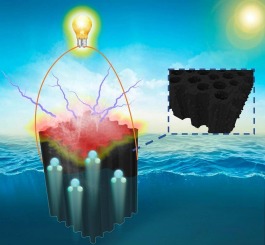
Unlike traditional solar panels or wind turbines, these systems do not depend directly on sunlight hitting a photovoltaic surface or on strong winds turning a turbine. Instead, electricity can be produced through interactions between water, materials, ions, humidity, and evaporation.
This makes Evaporation Energy one of the more unusual areas of clean-energy research.
In 2026, new research has attracted attention because researchers developed a vertical microrod generator designed to improve the movement of ions during evaporation-driven power generation. The reported device reached a power density of 14.3 watts per square meter and maintained operation for 30 days under ambient conditions.
Although this technology is still developing, the concept is fascinating. Water that is naturally disappearing into the air could potentially be used to produce useful electrical power.
Table of Contents
- What Is Evaporation Energy?
- How Can Evaporating Water Produce Electricity?
- Vertical Microrods Could Improve Power Generation
- Small Devices Could Power Sensors
- Recycled Materials May Make the Technology More Sustainable
- Evaporation Could Work With Other Energy Technologies
- The Challenges That Still Need to Be Solved
- Future Applications of Evaporation Energy
- Frequently Asked Questions
- Conclusion
1. What Is Evaporation Energy?
Evaporation Energy refers to energy that can be harvested from processes associated with water evaporation. When water evaporates, molecules move from a liquid state into the surrounding air. This natural process can create changes in moisture, temperature, fluid movement, and ion distribution.
Researchers have discovered that these changes can be used in specially designed materials to create an electrical potential.
The basic concept is different from conventional electricity generation. Instead of burning fuel or rotating a generator, electricity is produced through microscopic interactions between water and a material.
This field is sometimes described as hydrovoltaic energy harvesting. Research into water-evaporation electricity has been developing for several years, but improvements in materials and device design are now being investigated to increase useful output.
In particular, recent work has focused on improving the movement of ions inside tiny channels.
2. How Can Evaporating Water Produce Electricity?
At first, it may seem strange that evaporation could generate electricity. However, water contains charged particles, and interactions between water and solid surfaces can influence how ions move.
When water passes through tiny structures, electrical charges can become separated. As evaporation continues, this movement can contribute to an electrical potential.
The process is not the same as a battery. Instead, the device continuously uses environmental conditions that support evaporation and ion movement.
Researchers have been trying to improve this process because traditional evaporation-based generators can suffer from slow and uncontrolled fluid movement.
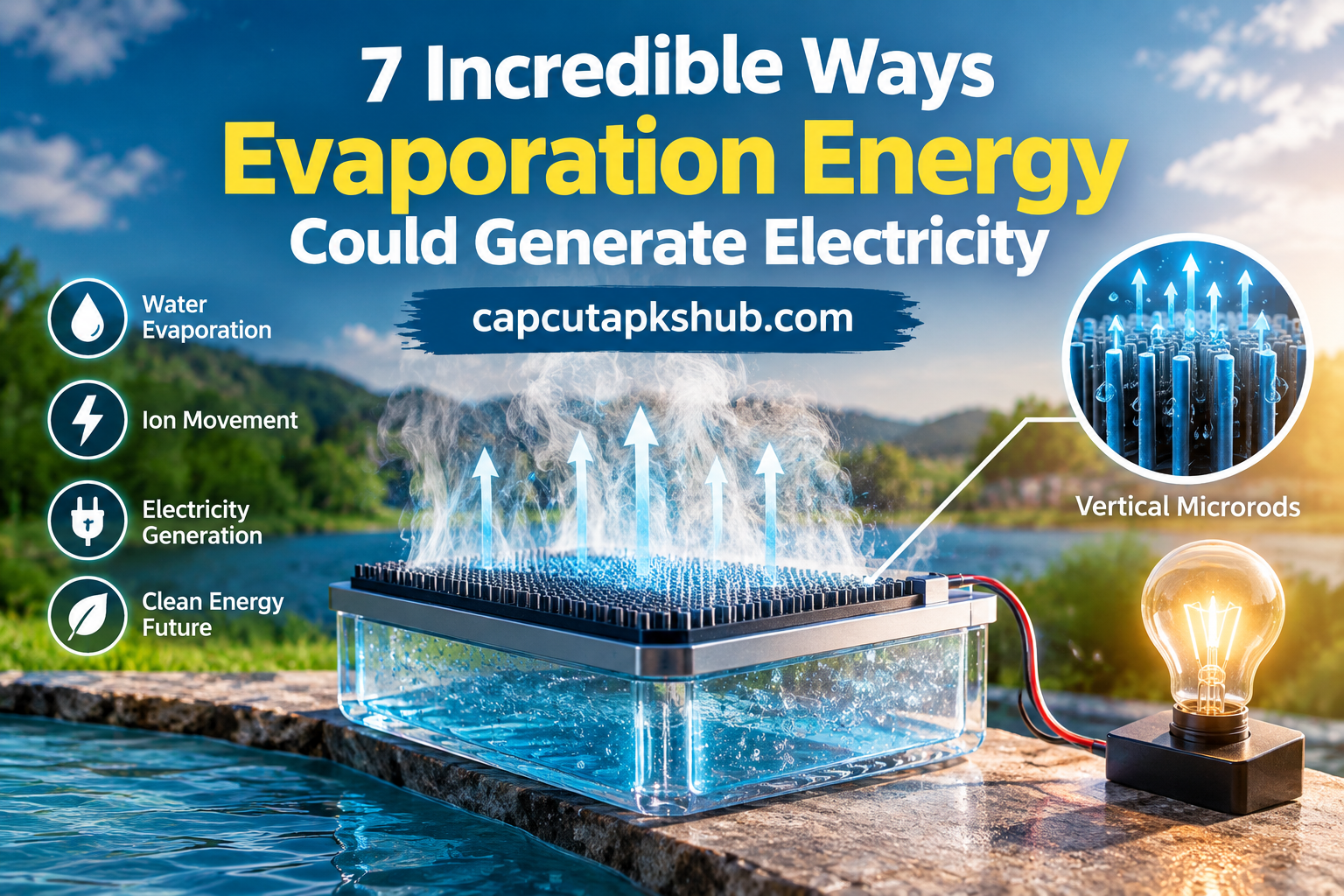
A 2026 Nature Energy study introduced a vertical microrod generator designed to create a more directional pressure gradient. According to the researchers, this design enabled faster ion transport and improved the resulting power output.
Therefore, Evaporation Energy is not simply about letting water dry. The real challenge is controlling microscopic physical processes well enough to produce useful electricity.
3. Vertical Microrods Could Improve Power Generation
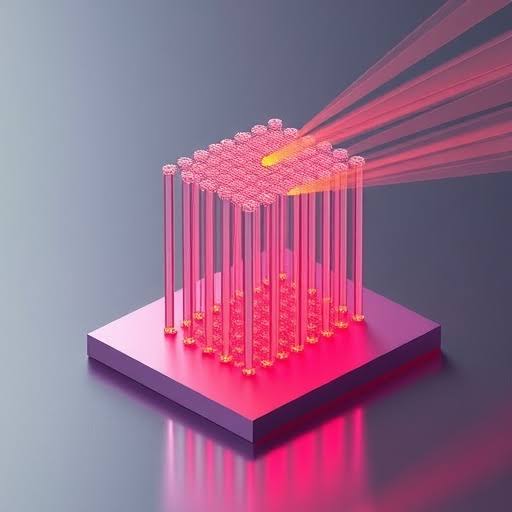
One of the most interesting recent developments involves tiny vertical structures called microrods.
The researchers used machine-learning-guided design to optimize the geometry of these structures. The goal was to improve fluid movement and ion transport inside the generator.
The resulting system was reported to achieve a power conversion efficiency of 21.5% and a power density of 14.3 watts per square meter under the reported experimental conditions. It also remained stable for 30 days in ambient conditions.
These numbers are important because low power density has been one of the major limitations of evaporation-based energy harvesting.
However, the technology should not be confused with large-scale power generation today. The reported results come from experimental devices, and much more work would be required before such systems could compete with major electricity sources.
Still, the research shows how Evaporation Energy could potentially become more practical through better engineering.
4. Small Devices Could Power Sensors
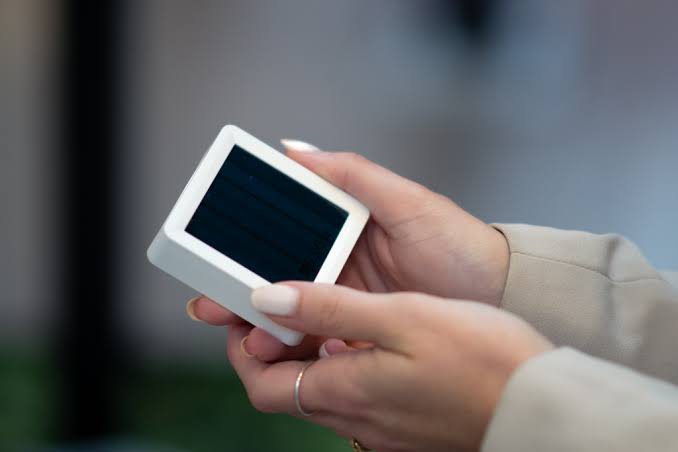
One of the most realistic future uses of Evaporation Energy may be for small electronic devices rather than entire cities.
Many modern technologies require only tiny amounts of electricity. Environmental sensors, monitoring devices, wireless systems, and some Internet of Things applications can operate with relatively low power.
Researchers have already demonstrated experimental evaporation-driven generators connected to small devices. The 2026 Nature Energy work reported that integrated arrays could power emergency lights, smoke alarms, informational displays, and a 36-watt ceiling lamp in laboratory demonstrations.
This does not mean evaporation will immediately replace conventional electricity. Instead, it suggests that local energy harvesting could become useful in specific situations.
For example, a sensor placed near a water source could potentially harvest environmental energy without being connected to a traditional electrical grid.
Such systems could be especially interesting where replacing batteries frequently would be difficult.
5. Recycled Materials May Make the Technology More Sustainable
Another interesting direction is the use of waste materials in hydrovoltaic devices.
In September 2026, researchers reported a hydrovoltaic electricity generator made with nanofibrous membranes produced from recycled polyethylene terephthalate, commonly known as PET. The research explored how recycled material could be used to harvest energy from natural water evaporation.
This is important because the environmental value of an energy technology depends not only on how electricity is produced but also on how the device itself is manufactured.
If expensive or difficult-to-recycle materials are required, the overall environmental benefits may be reduced.
Consequently, combining Evaporation Energy with recycled materials could provide an interesting pathway for future low-power devices.
More research will still be needed to determine long-term durability, manufacturing costs, recycling performance, and real-world efficiency.
6. Evaporation Could Work With Other Energy Technologies
The future of Evaporation Energy may not involve using evaporation alone.
Instead, researchers could combine evaporation-based generators with other technologies.
For example, water evaporation can be connected with solar-driven systems because solar heat naturally increases evaporation. Thermal gradients could also be used alongside evaporation to improve overall energy harvesting.
Another recent 2026 study examined passive evaporative cooling together with solar interfacial evaporation and thermoelectric generation. The model explored simultaneous water evaporation and electricity production, showing how thermal management and device geometry can influence performance.
This type of hybrid design could become important because one environmental process may be used for several purposes.
A future system might potentially provide cooling, water treatment, and small amounts of electricity at the same time.
Such combinations could make Evaporation Energy more useful than a standalone generator.
7. The Challenges That Still Need to Be Solved
Despite the exciting research, several challenges remain.
The first challenge is power output. Evaporation-based generators generally produce much less electricity than large conventional power plants. Therefore, their most realistic near-term applications are likely to involve small electronics.
The second challenge is environmental variation. Evaporation depends on factors such as temperature, humidity, airflow, and water availability. These conditions can change throughout the day.
The third challenge is durability. Materials may become contaminated or degraded after long periods of exposure to water and environmental conditions.
Cost is another concern. A technology may work successfully in a laboratory but still be difficult or expensive to manufacture at commercial scale.
Finally, energy efficiency must be considered carefully. A device should produce enough useful energy to justify its manufacturing, installation, maintenance, and replacement costs.
For these reasons, Evaporation Energy should currently be viewed as an emerging research field rather than a replacement for established electricity technologies.
Future Applications of Evaporation Energy
The future applications of Evaporation Energy could be surprisingly broad.
Small environmental sensors may be one possibility. These sensors could monitor humidity, temperature, water quality, or other environmental conditions.
Remote monitoring systems could also benefit. If a device can harvest energy from its surroundings, battery replacement could potentially become less frequent.
Wearable or flexible electronics are another possible area. Previous research has explored evaporation-driven electricity using flexible materials, although much development is still needed before widespread commercial use.
Smart agriculture could also become an interesting application. Sensors placed near irrigation systems, soil, or water reservoirs might eventually use local environmental energy to support low-power monitoring.
Furthermore, arrays of many small generators could potentially increase the total output. The 2026 microrod research demonstrated that individual generators could be combined into larger arrays for practical demonstrations.
Therefore, the long-term value of Evaporation Energy may come from networks of small energy harvesters rather than one massive generator.
Frequently Asked Questions
What is Evaporation Energy?
Evaporation Energy is an emerging approach in which natural water evaporation and related microscopic processes are used to generate electricity.
Can evaporating water really generate electricity?
Yes. Experimental devices have demonstrated electricity generation from water evaporation. Recent research has focused on improving ion transport and increasing power output.
Is evaporation energy commercially available?
The technology is still developing. Although laboratory demonstrations have produced useful electrical output, large-scale commercial deployment has not yet been established.
Can evaporation power a house?
Current experimental systems are not a practical replacement for household electricity supplies. Their potential is more closely associated with low-power electronics and specialized applications.
What is hydrovoltaic energy?
Hydrovoltaic energy is a field of research involving electricity generation from interactions between water and materials, including processes associated with evaporation.
Can recycled materials be used?
Yes. Recent research has explored hydrovoltaic generators made from recycled PET-based nanofibrous membranes.
Does humidity affect evaporation-based electricity generation?
Yes. Environmental conditions such as humidity and temperature can influence evaporation and therefore affect device performance.
Could evaporation energy become important in the future?
It could become useful for specific low-power applications if efficiency, durability, cost, and scalability are improved. However, its future role remains an active research question.
Conclusion
Water evaporation may look like one of the simplest natural processes, but it is becoming the foundation of an unusual area of energy research. Scientists are exploring how microscopic ion movement and water-material interactions can be converted into electricity.
Recent research has made the concept even more interesting. A 2026 Nature Energy study demonstrated a machine-learning-guided vertical microrod generator that improved ion transport and achieved significantly higher power performance than many earlier evaporation-driven approaches.
At the same time, research into recycled materials and hybrid systems is opening additional possibilities.
Evaporation Energy is not yet ready to replace solar, wind, nuclear, or conventional electricity generation. However, it could eventually become useful for small sensors, remote electronics, environmental monitoring, and other low-power technologies.
The most exciting part is that the energy source does not need to look dramatic. It may simply come from water slowly moving into the atmosphere.
As materials science and nanotechnology continue to improve, Evaporation Energy could turn an ordinary natural process into a surprisingly useful source of clean electricity.