Energy Transfer in Waves: 7 Important Ways Energy Is Moved
Energy Transfer in Waves explains how energy is moved from one place to another through different types of waves. When a wave is produced, energy is carried away from its source. However, the material through which a mechanical wave travels is not usually carried along with it. Instead, particles are made to vibrate around their normal positions, and energy is passed from one particle to another. This process can be observed in sound, water, seismic, and many other waves. Therefore, understanding wave energy is important for both physics and everyday technology.
Table of Contents
- What Is Energy Transfer in Waves?
- How Do Waves Transfer Energy?
- Energy Transfer in Mechanical Waves
- Energy Transfer in Electromagnetic Waves
- How Amplitude Affects Wave Energy
- How Frequency Affects Energy Transfer
- Examples of Energy Transfer in Waves
- Why Energy Transfer in Waves Matters
- Conclusion
What Is Energy Transfer in Waves?
Energy transfer in waves is the process through which energy is moved from one location to another by a wave. A wave is created when a disturbance is produced in a system. Once the disturbance begins to travel, energy is carried with it. However, matter does not always move in the same direction or over the same distance as the wave.
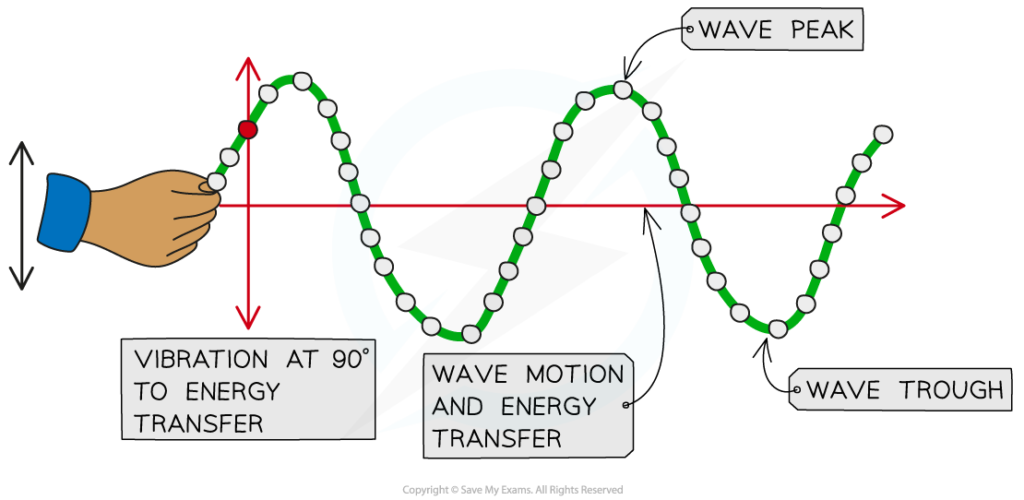
For example, when a stone is dropped into calm water, ripples are produced around the point of impact. The ripples then spread across the surface. Energy is transferred outward as the waves move. However, the water itself is mainly moved up and down or in small circular motions. Therefore, the movement of energy should not be confused with the movement of matter.
Energy Transfer in Waves The same idea can be observed with a rope. When one end of a rope is moved up and down, a wave is produced. The disturbance travels along the rope, while each part of the rope moves around its normal position. As a result, energy is transferred from one section of the rope to another.
How Do Waves Transfer Energy?
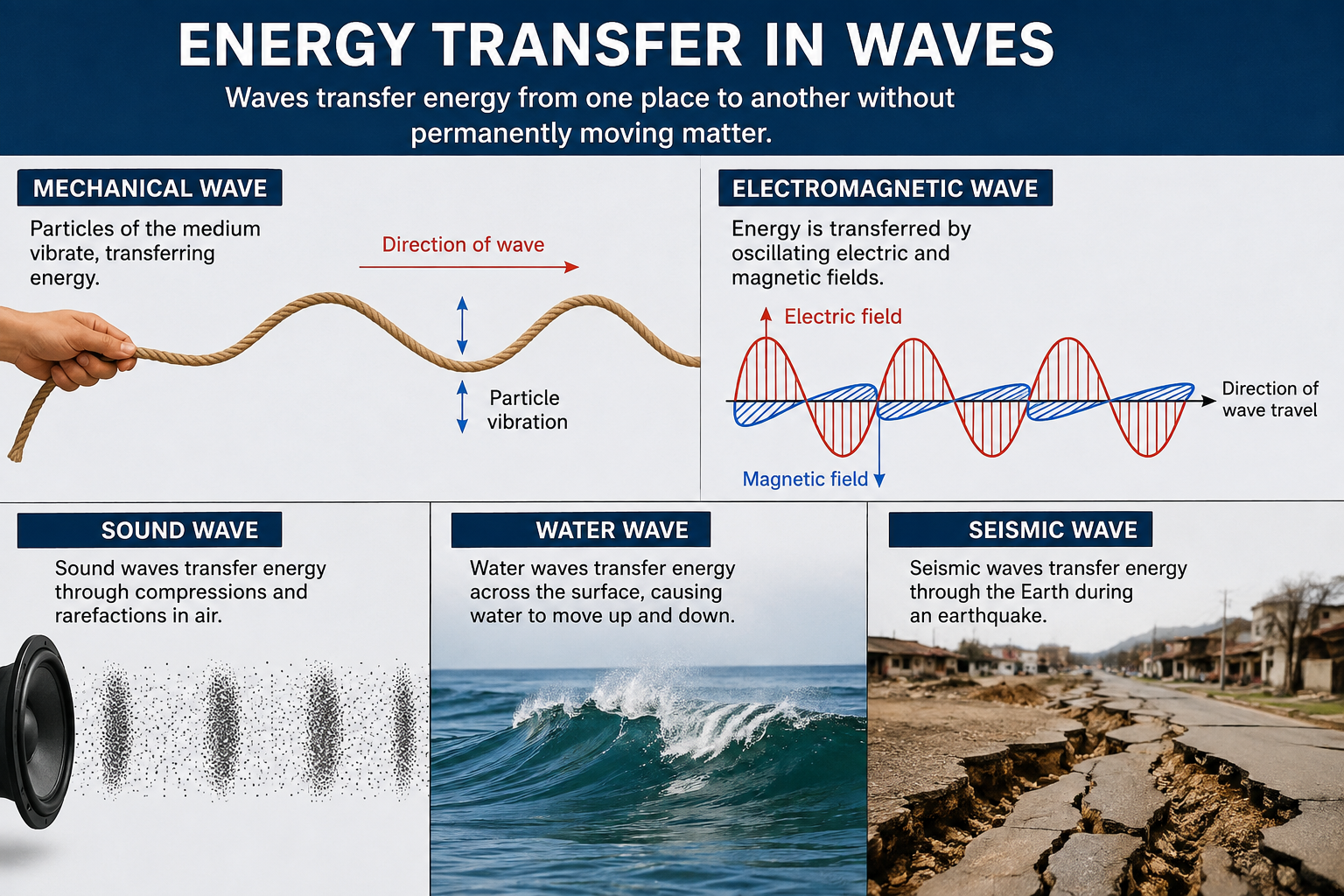
Waves transfer energy by creating a disturbance that moves through a medium or through space. In mechanical waves, the particles of a medium are disturbed. Their motion then affects nearby particles. In this way, energy is gradually transferred through the medium.
Sound waves provide a simple example. When an object vibrates, nearby air particles are disturbed. Compressions and rarefactions are produced as the particles are pushed together and then spread apart. These changes are passed through the air until the sound reaches a listener. Therefore, sound energy has been transferred from the source to another location.
However, not all waves require a physical medium. Electromagnetic waves can travel through empty space. Light from the Sun, for example, travels through the vacuum between the Sun and Earth. Energy is carried by changing electric and magnetic fields. Consequently, energy can be transferred over very large distances without a material medium.
Energy Transfer in Mechanical Waves
Mechanical waves require a medium for energy transfer. The medium may be a solid, liquid, or gas. Sound waves, water waves, and seismic waves are common examples of mechanical waves.
When a mechanical wave passes through a medium, particles are disturbed from their normal positions. However, they usually do not travel with the wave from the source to the destination. Instead, their motion is used to transfer energy to neighboring particles.
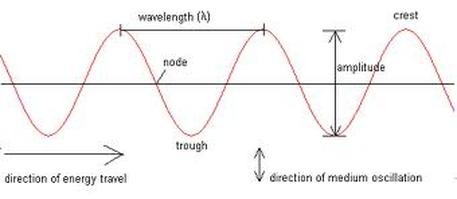
Energy Transfer in Waves For instance, energy transfer in waves can be demonstrated with a stretched rope. When one end is moved, a disturbance is created. That disturbance travels along the rope. Each section of the rope is moved as the wave passes, and energy is transferred toward the other end.
Mechanical waves can also be divided into transverse and longitudinal waves. In transverse waves, particles are moved mainly perpendicular to the direction of wave travel. In longitudinal waves, particles are moved mainly parallel to the direction of travel. Therefore, energy can be transferred through different types of particle motion.
Energy Transfer in Electromagnetic Waves
Electromagnetic waves are different from mechanical waves because a material medium is not required. Energy is transferred through changing electric and magnetic fields. As a result, electromagnetic waves can travel through the vacuum of space.
Visible light is one example of electromagnetic radiation. When sunlight reaches Earth, its energy can be absorbed by land, water, plants, and other materials. Some of that energy can then be converted into thermal or chemical energy.
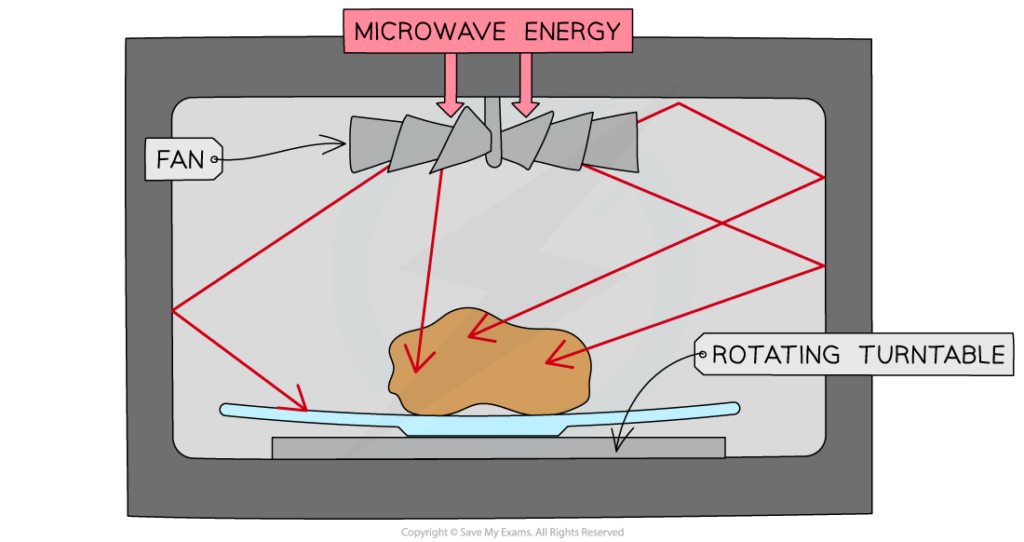
Other electromagnetic waves are also used in modern technology. Radio waves are used for communication, while microwaves are used in communication systems and heating applications. Infrared radiation is associated with thermal energy, and X-rays are used in medical imaging. Therefore, electromagnetic energy transfer has become an important part of modern life.
How Amplitude Affects Wave Energy
Amplitude describes the maximum displacement of a wave from its normal position. It is one of the important properties used when wave energy is studied. In many wave systems, a larger amplitude is associated with greater energy transfer.
For example, a loud sound is produced when larger vibrations are created by a sound source. A quieter sound is produced when the vibrations are smaller. Therefore, more energy is generally associated with the larger-amplitude sound wave.
A similar effect can be observed in a rope. When the rope is moved with a larger displacement, a wave with greater amplitude is produced. More energy can then be transferred along the rope.
Energy Transfer in Waves In many simple wave systems, energy is proportional to the square of amplitude. This means that a small increase in amplitude can result in a much larger increase in energy. However, the exact relationship can depend on the type of wave and the properties of the system being studied.
How Frequency Affects Energy Transfer
Frequency describes the number of complete cycles or vibrations that occur during a given period. It is measured in hertz. Frequency is particularly important when electromagnetic waves are considered because the energy carried by each photon depends on its frequency.
Higher-frequency electromagnetic radiation carries more energy per photon than lower-frequency radiation. For example, X-rays have a higher frequency than visible light. Therefore, each X-ray photon carries more energy than a photon of visible light.
However, frequency should not be viewed as the only factor that determines the total energy transferred by a wave. The amount of energy can also depend on amplitude, intensity, the source, and the conditions of the system.
Moreover, frequency is important in many mechanical wave systems. When a source vibrates more frequently, more wave cycles can be produced over a certain period. Consequently, the amount of energy transferred can be affected by the frequency of the source.
Examples of Energy Transfer in Waves
Many examples of Energy Transfer in Waves can be found in everyday life. Sound is one of the most familiar examples. When a person speaks, vibrations are produced by the vocal cords. These vibrations create pressure changes in the surrounding air. The sound energy is then transferred toward another person.
Water waves provide another example. When waves move across the surface of a lake or ocean, energy is carried across the water. When those waves reach a coastline, some of their energy can be transferred to sand, rocks, and structures near the shore.
Energy Transfer in Waves Seismic waves are also important examples. During an earthquake, a large amount of energy can be released inside the Earth. That energy is then transferred through the ground by seismic waves. As a result, buildings and other structures can be affected when the waves reach the surface.
Light is another major example. Energy from the Sun is transferred to Earth through electromagnetic radiation. When this energy is absorbed by a surface, heating can occur. Plants can also use light energy during photosynthesis. Therefore, energy transfer through light supports many natural processes.
Energy Transfer in Sound Waves
Sound waves are longitudinal mechanical waves that require a medium for their propagation. When a sound-producing object vibrates, nearby particles are disturbed. Compressions and rarefactions are then created in the medium.
Energy Transfer in Waves As the disturbance travels, energy is passed from one group of particles to another. When the wave reaches the human ear, some of its energy is transferred to the structures responsible for hearing. Vibrations are then converted into electrical signals that can be processed by the brain.
However, sound energy can also be absorbed by materials. Soft surfaces such as carpets, curtains, and acoustic panels can reduce reflections. As a result, some sound energy is converted into other forms of energy, mainly thermal energy.
Energy Transfer in Water Waves
Water waves are often used to demonstrate how energy can travel without large-scale transport of water. When a disturbance is created on the surface, waves spread outward. The water particles are moved by the passing wave, but they are not simply carried from the original point to the edge.
As waves approach a shore, their behavior can change because the water becomes shallower. Energy is eventually transferred to the coastline. Sand and small particles can be moved as a result. Therefore, the effects of wave energy can be seen even when the original disturbance was created far away.
Furthermore, ocean wave energy has been studied as a possible renewable energy resource. Special devices can be used to capture some of the energy from moving waves. That energy can then be converted into electrical power.
Energy Transfer in Seismic Waves
Seismic waves are produced when energy is released within the Earth. Earthquakes are a major source of these waves. Once they are generated, seismic energy can travel through rocks and other materials.
Different seismic waves transfer energy through different types of particle motion. Some waves cause particles to move back and forth in the direction of travel. Others produce movement that is perpendicular to the direction of travel.
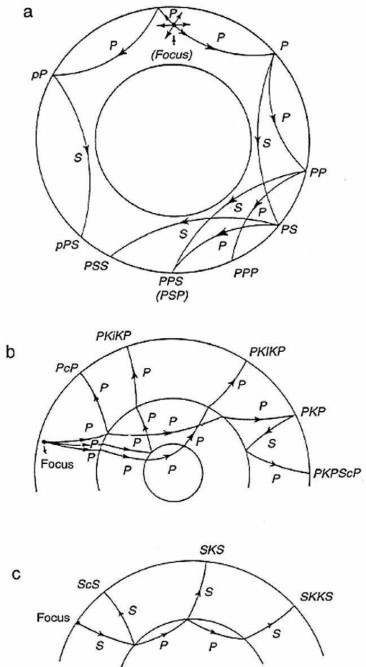
Energy Transfer in Waves When seismic waves reach the surface, their energy can cause the ground to move. Therefore, buildings, roads, bridges, and other structures may be affected. For this reason, seismic energy is carefully studied when earthquake-resistant structures are designed.
Why Energy Transfer in Waves Matters
Energy transfer in waves is important because waves are involved in many natural processes and technologies. Communication systems depend on electromagnetic waves to carry information. Sound waves are used for communication, measurement, and sensing. Similarly, seismic waves are used to study the structure of the Earth.
Wave energy is also being investigated for renewable power generation. Ocean waves contain mechanical energy that can potentially be converted into electricity. Although technical and environmental challenges are still being studied, wave energy could contribute to future energy systems.
Energy Transfer in Waves In addition, medical technologies depend on wave behavior. Ultrasound waves can be used to create images of structures inside the body. X-rays can be used to produce medical images. Therefore, knowledge of wave energy has applications far beyond basic physics.
Energy Transfer and Conservation of Energy
The idea of Energy Transfer in Waves is closely connected to the law of conservation of energy. Energy cannot simply be created or destroyed. Instead, it can be transferred from one place to another or changed from one form into another.
For example, electrical energy can be converted into sound energy by a speaker. The sound energy is then transferred through the surrounding air. When the sound reaches a wall, some energy may be reflected while some may be absorbed. The absorbed energy can eventually be converted into thermal energy.
Therefore, the energy involved in a wave process is not simply lost. Instead, it is transferred or transformed. This principle is used to understand how energy behaves in many physical systems.
Conclusion
Energy Transfer in Waves describes how energy is carried from one location to another through mechanical and electromagnetic waves. In mechanical waves, energy is transferred through the interaction and movement of particles in a medium. In electromagnetic waves, energy is carried through changing electric and magnetic fields.
Moreover, amplitude and frequency can influence the energy associated with waves. Sound, water, seismic, and light waves all demonstrate energy transfer in different ways. However, the material itself does not necessarily travel with the wave over the same distance.
As a result, the study of Energy Transfer in Waves is important in physics, communication, Earth science, medicine, and energy technology. By understanding how waves carry and transfer energy, many natural events and modern technologies can be explained more clearly.