Rocket Energy: 9 Powerful Facts About the Energy Needed to Reach Space
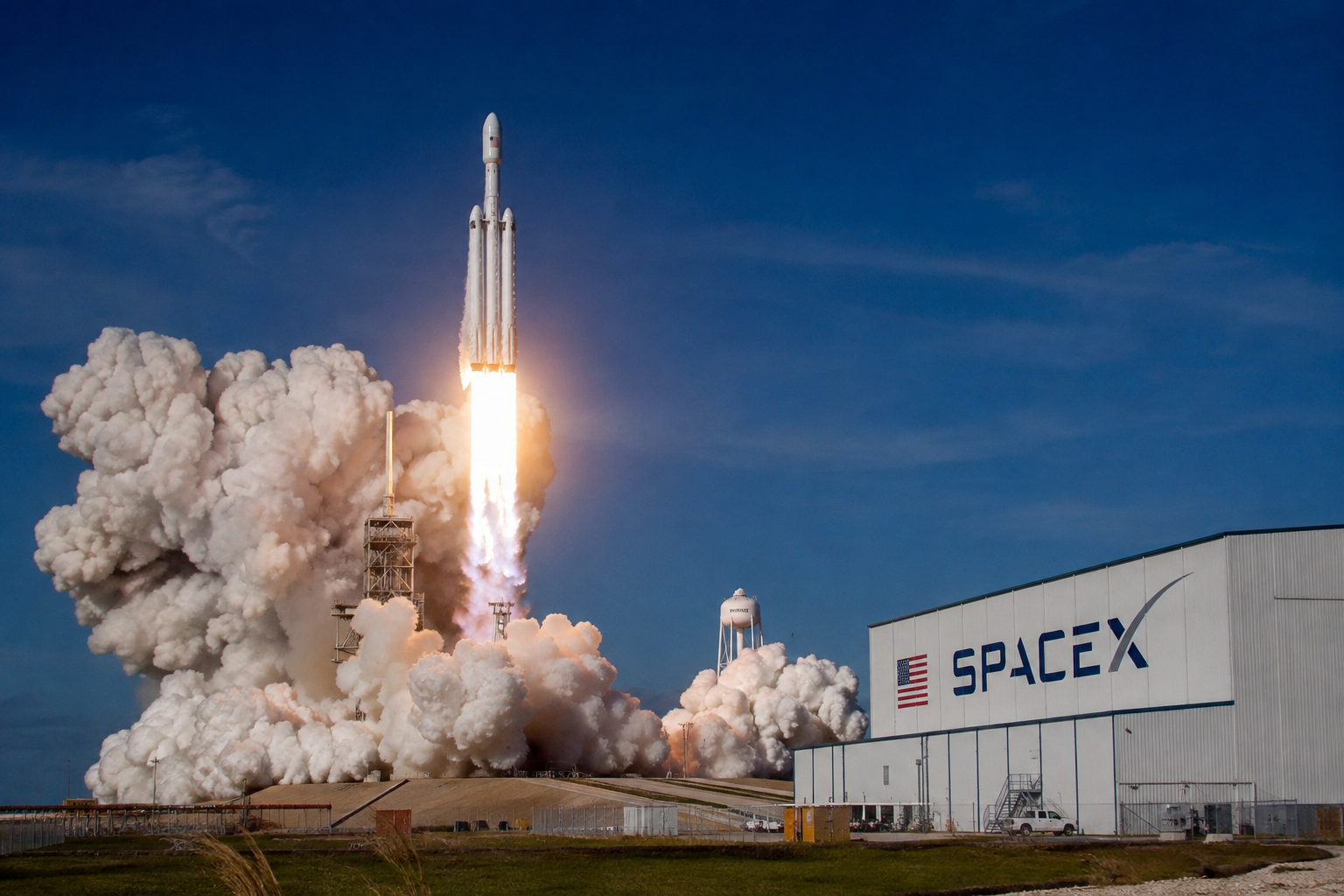
Rocket Energy is one of the most important parts of spaceflight because enormous amounts of energy must be converted into thrust before a rocket can escape Earth’s atmosphere and reach space. Unlike an airplane, a rocket cannot depend on surrounding air for propulsion. Instead, its propellant and oxidizer are carried onboard, allowing thrust to be produced even in a vacuum.
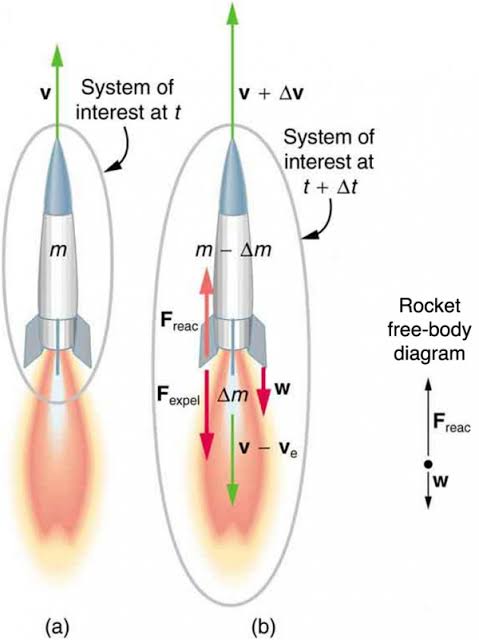
When a rocket launches, stored chemical energy is converted into heat, pressure and finally the kinetic energy of high-speed exhaust gases. As a result, the vehicle is pushed in the opposite direction. This basic process makes rocket energy a fascinating example of how stored energy can be transformed into motion.
📚 Table of Contents
╭──────────────────────────────────────────────╮
│ 01 What Is Rocket Energy?
│ 02 How Is Rocket Energy Created?
│ 03 9 Powerful Facts About Rocket Energy
│ 04 Why Rockets Need So Much Energy
│ 05 Rocket Energy and Propellant Mass
│ 06 Chemical vs. Electric Rocket Energy
│ 07 Rocket Energy Efficiency
│ 08 Frequently Asked Questions
│ 09 Conclusion
╰──────────────────────────────────────────────╯
What Is Rocket Energy?
Rocket Energy refers to the energy used by a rocket propulsion system to accelerate the vehicle and its exhaust. In a conventional chemical rocket, energy stored in the propellants is released through combustion.
The hot gases produced during combustion are then expanded through a nozzle. During this process, thermal and chemical energy is converted into high-speed exhaust motion. According to NASA, thrust is generated when the rocket accelerates a mass of gas, causing the rocket to accelerate in the opposite direction.
Therefore, rocket energy is not simply about how much fuel is carried. The way that energy is converted into exhaust velocity and thrust is equally important.
How Is Rocket Energy Created?
In a chemical rocket, fuel and oxidizer are stored onboard. They are brought together inside the combustion system, where combustion produces extremely hot, high-pressure gases.
These gases are then directed through a nozzle. As the gases accelerate through the nozzle, a reaction force is produced and the rocket is pushed forward.
This process can be simplified as:
Stored Chemical Energy → Heat & Pressure → High-Speed Exhaust → Thrust → Rocket Motion
Because the oxidizer is carried by the rocket, propulsion can continue after the vehicle leaves the atmosphere. This is one of the fundamental differences between rockets and air-breathing engines.
9 Powerful Facts About Rocket Energy
1. Most Rocket Energy Is Used to Create Thrust
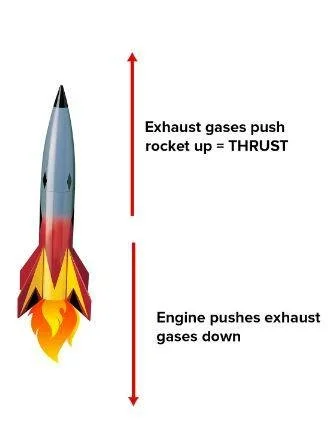
The first important fact about Rocket Energy is that its main purpose is to produce the momentum needed to accelerate the vehicle.
The propellant is burned, and the resulting gases are accelerated through a nozzle. Consequently, the exhaust receives momentum in one direction while the rocket receives momentum in the opposite direction.
NASA describes rocket thrust through the relationship between propellant mass flow, exhaust velocity and nozzle pressure.
The process may look simple from the outside, but enormous engineering challenges must be managed inside the engine.
2. Rockets Carry Their Own Oxidizer
A major reason rockets can operate in space is that they do not need atmospheric oxygen for combustion.
Airplane engines depend on air from the atmosphere. Rockets, however, carry their oxidizer onboard with the propellant. Therefore, thrust can still be produced when there is essentially no surrounding atmosphere.
This makes rocket propulsion especially useful for reaching orbit and operating beyond Earth.
3. Exhaust Velocity Is Extremely Important
The amount of useful performance obtained from rocket energy is strongly connected to exhaust velocity.
When exhaust gases are expelled faster, more momentum can be transferred to the vehicle. NASA’s explanation of the rocket equation shows that effective exhaust velocity and propellant mass ratio are directly connected to the achievable change in velocity.
Therefore, rocket designers continuously work to improve the way energy is converted into exhaust velocity.
4. Rocket Energy Must Fight Earth’s Gravity
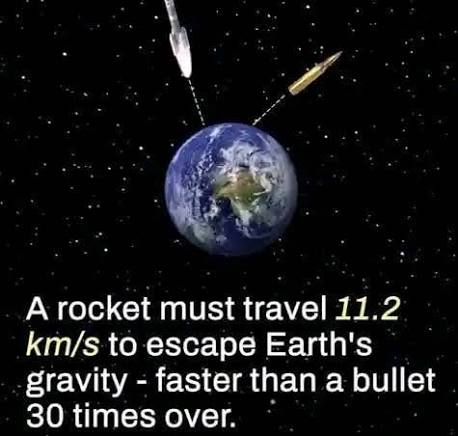
A rocket does not simply move upward through empty space.
During launch, energy is being used while the vehicle is accelerating against Earth’s gravitational field. At the same time, atmospheric drag must also be overcome during the early part of flight.
As a result, the energy requirement for reaching orbit is much greater than simply lifting a rocket to a particular altitude.
The rocket equation provides a useful framework for understanding why velocity requirements and mass ratios become so important during powered flight.
5. Most Launch Mass Is Propellant
One of the most surprising facts about Rocket Energy is how strongly propellant mass influences rocket design.
NASA’s ideal rocket-equation example shows that, under the assumptions used in that example, about 90% of the launch mass would be propellant for a vehicle reaching a 200-mile-high orbit with the stated performance parameters.
This demonstrates why rockets are designed around mass efficiency.
Every additional kilogram of structure, equipment or payload can affect how much propellant is required.
🚀 Rocket Energy and Launch Mass
| Component | Role in Launch |
|---|---|
| Propellant | Provides stored energy |
| Oxidizer | Supports combustion |
| Engine | Converts energy into thrust |
| Nozzle | Accelerates exhaust |
| Structure | Holds the vehicle together |
| Payload | Performs the mission |
The table shows why rocket engineering is largely an exercise in balancing energy, mass and performance.
6. Specific Impulse Measures Propellant Efficiency
Specific impulse, usually written as Isp, is one of the most important measurements in rocket propulsion.
It indicates how effectively propellant is converted into useful thrust. NASA explains that a higher specific impulse means more thrust can be produced for the same propellant weight flow.
Therefore, specific impulse is often used when different rocket engines or propulsion systems are being compared.
A higher value generally indicates better propellant efficiency, although real mission performance also depends on many other factors.
7. Chemical Rockets Store Energy in Propellant
Traditional chemical rockets obtain their propulsion energy from chemical reactions.
The stored chemical energy is released during combustion. The resulting hot gas is then accelerated through the nozzle, where part of the available energy is converted into exhaust kinetic energy.
NASA technical material describes a chemical rocket as an energy converter in which potential energy stored in molecular bonds is released as heat and then converted into kinetic energy.
This conversion is the heart of conventional rocket propulsion.
8. Electric Propulsion Uses Energy Differently
Not every spacecraft propulsion system depends on chemical combustion.
Electric propulsion systems use electrical power to accelerate propellant particles to very high velocities. Because the propulsion method is different, the relationship between energy, thrust and propellant consumption also changes.
Electric propulsion can provide very high exhaust velocities, but generally produces much lower thrust than the chemical engines used for launch. NASA’s spaceflight material notes that non-chemical propulsion systems such as ion engines can achieve substantially higher exhaust velocities than conventional chemical systems.
Therefore, electric propulsion is particularly useful for spacecraft already in space rather than for lifting heavy vehicles from Earth’s surface.
9. Rocket Energy Is About More Than Fuel
The final fact is perhaps the most important: Rocket Energy is not simply a measurement of fuel quantity.
The overall performance depends on how efficiently stored energy is transformed into exhaust velocity and thrust. Engine design, nozzle performance, propellant mass, vehicle mass, gravity and aerodynamic effects all influence the final result.
For this reason, a rocket with more propellant does not automatically become a better rocket.
Instead, the energy must be converted efficiently while the vehicle’s mass is carefully controlled.
Why Do Rockets Need So Much Energy?
Reaching space and reaching orbit are not exactly the same thing.
A vehicle can travel to a high altitude without remaining in orbit. To achieve orbit, however, the spacecraft must gain substantial horizontal velocity while also climbing away from Earth’s surface.
Consequently, a large amount of energy is required to increase the vehicle’s velocity and overcome losses during flight.
The rocket equation illustrates why this becomes challenging. As more velocity is required, the necessary propellant mass can increase dramatically because rocket performance depends logarithmically on the mass ratio.
This is one reason orbital launch vehicles are built with multiple stages.
Rocket Energy and Staging
Rocket stages allow empty tanks, engines and other hardware to be discarded after their propellant has been consumed.
As a result, the remaining vehicle becomes lighter during the mission.
Reducing unnecessary mass allows the remaining propellant to be used more effectively. Therefore, staging is an important technique for improving launch performance.
The principle is straightforward:
Burn Propellant → Reduce Mass → Discard Empty Stage → Continue Acceleration
This approach helps explain why large orbital rockets are often divided into multiple sections.
Chemical vs. Electric Rocket Energy
| Feature | Chemical Propulsion | Electric Propulsion |
|---|---|---|
| Main energy source | Chemical energy | Electrical energy |
| Thrust | Very high | Generally low |
| Exhaust velocity | Lower | Very high |
| Best use | Launch and major maneuvers | Long-duration space missions |
| Propellant efficiency | Lower | Higher |
| Operation in space | Yes | Yes |
The two systems are therefore designed for different jobs.
Chemical propulsion is excellent when very high thrust is needed quickly. Electric propulsion, meanwhile, can provide efficient acceleration over long periods.
Rocket Energy Efficiency
Rocket propulsion is often described as inefficient because a large amount of energy and propellant is required to place relatively small payloads into orbit.
However, efficiency needs to be considered carefully.
Specific impulse provides one useful way to compare propellant efficiency. Higher specific impulse means that more useful impulse can be obtained from a given propellant weight flow.
At the same time, real launch performance is affected by gravity, atmospheric drag, engine design, vehicle structure and mission requirements.
Therefore, no single number completely describes the efficiency of a launch vehicle.
The Future of Rocket Energy
Future propulsion technologies could change how energy is used in space.
Chemical rockets will remain important for high-thrust launches, but electric propulsion, nuclear propulsion and other advanced concepts could provide new options for missions beyond Earth orbit.
The biggest challenge is not simply finding a propulsion system with more energy. Instead, the goal is to convert available energy into useful motion more efficiently.
As space missions become longer and more ambitious, propulsion efficiency could become increasingly important.
Frequently Asked Questions
What Is Rocket Energy?
Rocket Energy is the energy used by a rocket propulsion system to produce thrust and accelerate the vehicle. In chemical rockets, stored chemical energy is converted into heat, exhaust motion and ultimately rocket motion.
How Does Rocket Energy Create Thrust?
Fuel and oxidizer are burned, producing high-temperature gases. These gases are accelerated through a nozzle, and the resulting momentum exchange produces thrust.
Why Do Rockets Carry Oxidizer?
Rockets carry oxidizer because combustion cannot depend on atmospheric oxygen once the vehicle reaches thin air or space. This allows rocket engines to operate in a vacuum.
What Is Specific Impulse?
Specific impulse, or Isp, is a measure used to describe rocket propulsion efficiency. A higher specific impulse generally means more thrust can be obtained from a given propellant weight flow.
Why Is So Much Propellant Needed?
Large amounts of propellant are required because a rocket must accelerate itself, its remaining propellant, its structure and its payload. The rocket equation shows how velocity requirements and mass ratio are closely connected.
Is Electric Propulsion More Efficient Than Chemical Propulsion?
Electric propulsion can achieve much higher exhaust velocities and can be highly propellant-efficient. However, its thrust is generally much lower, so it is not normally used to launch heavy spacecraft from Earth’s surface.
Can Rockets Work Without Air?
Yes. Rockets carry their oxidizer onboard and therefore can generate thrust in a vacuum.
Conclusion
Rocket Energy is the hidden force behind every successful launch. From chemical reactions inside an engine to high-speed exhaust leaving a nozzle, energy is continuously being transformed into motion.
Moreover, reaching orbit requires much more than simply producing a powerful engine. Propellant mass, exhaust velocity, specific impulse, gravity, atmospheric drag and vehicle design must all be considered together.
The rocket equation demonstrates why mass efficiency is so important, while specific impulse provides a useful way to compare propulsion performance.
Ultimately, the future of space exploration will depend not only on producing more powerful rockets but also on finding smarter ways to convert energy into useful motion. As propulsion technologies improve, Rocket Energy will remain a fundamental part of humanity’s journey beyond Earth.