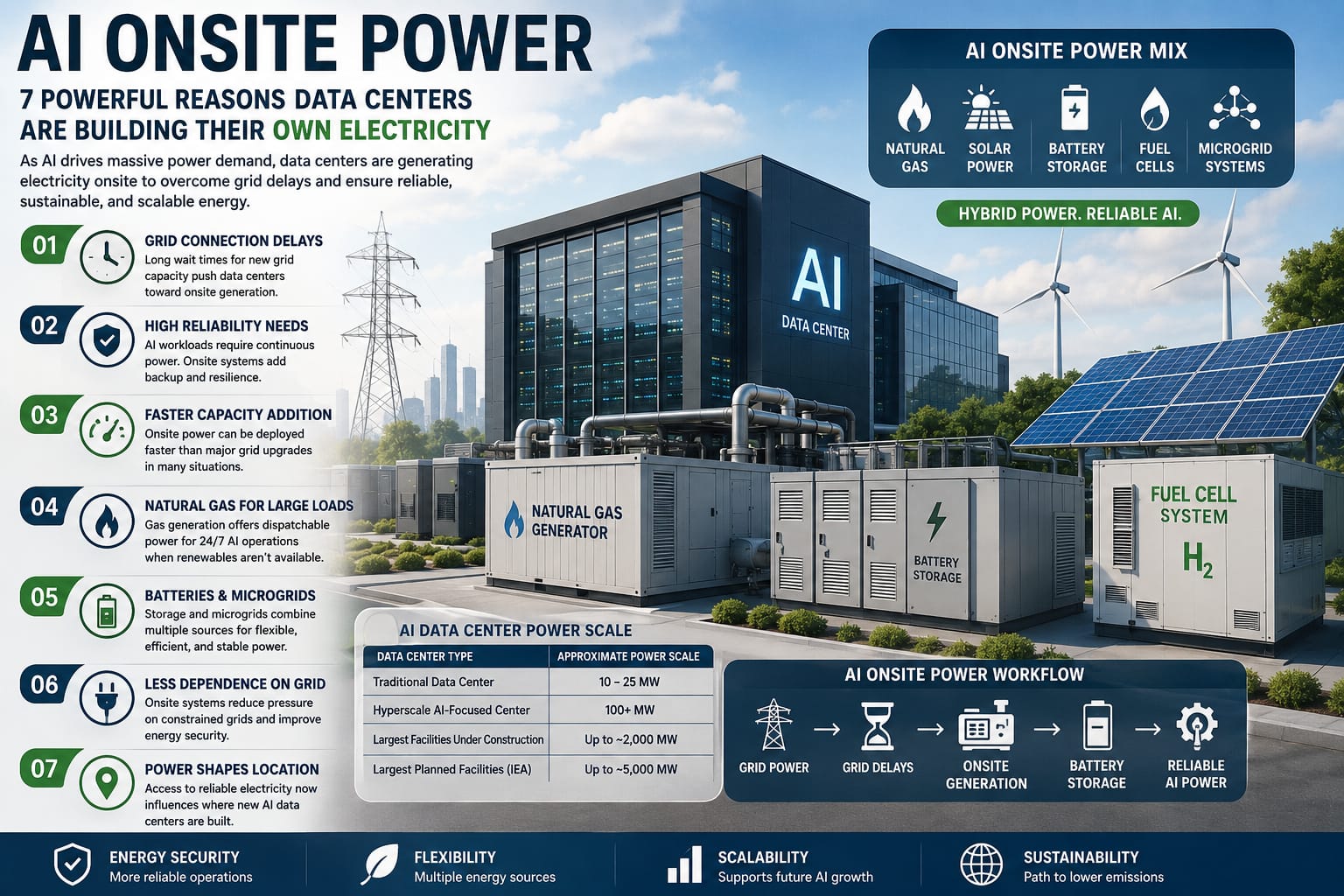
AI Onsite Power: 7 Powerful Reasons Data Centers Are Building Their Own Electricity
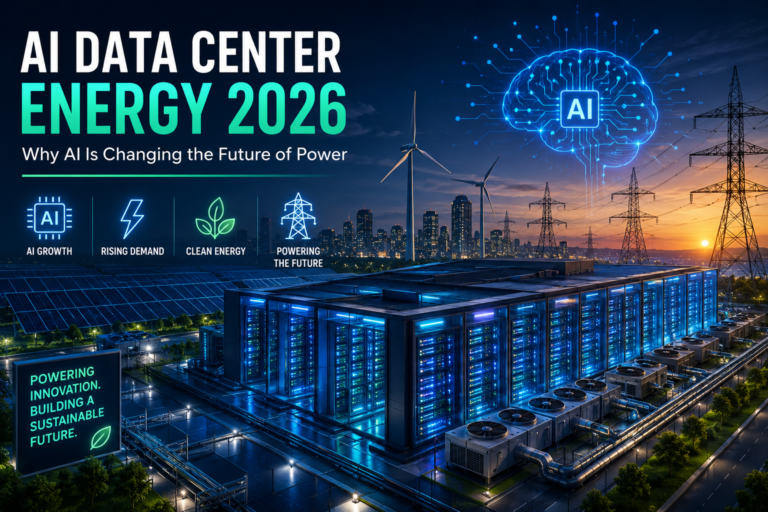
AI Onsite Power is becoming an important part of the data-center energy conversation as artificial intelligence drives demand for reliable electricity. Instead of waiting entirely for new grid connections, some data-center developers are exploring onsite or behind-the-meter generation to obtain power closer to their facilities. The shift is being driven by grid bottlenecks, long connection timelines, and the need for dependable electricity for increasingly power-hungry AI workloads. Recent reporting shows that U.S. businesses are turning to larger onsite systems as utility capacity becomes harder to secure.
📚 Table of Contents
╭──────────────────────────────────────────────╮
│ 01 What Is AI Onsite Power? │
│ 02 Why Are Data Centers Building Power? │
│ 03 7 Powerful Reasons for AI Onsite │
│ 04 Natural Gas, Batteries & Fuel Cells │
│ 05 AI Onsite Power and the Grid │
│ 06 Benefits and Challenges │
│ 07 Power Demand Table │
│ 08 Frequently Asked Questions │
│ 09 Conclusion │
╰──────────────────────────────────────────────╯
What Is AI Onsite Power?
AI Onsite Power refers to electricity generated or stored at, or very close to, a data-center facility instead of being supplied entirely through the traditional utility grid.
The concept is also described using terms such as behind-the-meter power, onsite generation, distributed generation, or microgrid power.
Depending on the project, electricity can be supplied through natural-gas generators, fuel cells, batteries, solar installations, microturbines, or combinations of several technologies.
The goal is not necessarily to disconnect a data center from the grid. In many cases, onsite generation can be used alongside a grid connection to provide additional capacity, backup power, or greater flexibility.
Why Are Data Centers Looking at Their Own Power?
AI has changed the electricity requirements of modern data centers.
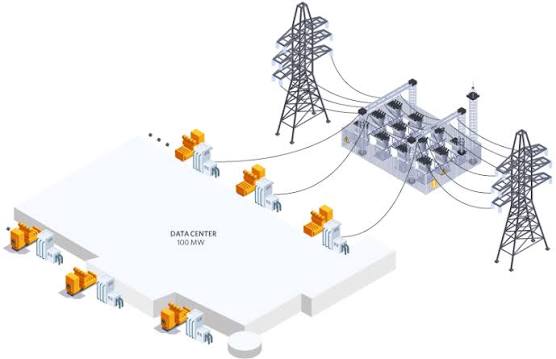
The International Energy Agency estimates that data-center electricity consumption was around 415 TWh in 2024, equal to about 1.5% of global electricity consumption. Its base case projects that consumption could reach approximately 945 TWh by 2030.
At the same time, electricity infrastructure often takes longer to build than a data center.
The IEA notes that a data center can become operational in roughly two to three years, while new energy infrastructure can require much longer planning and construction periods.
That timing difference is one reason onsite power is attracting attention.
7 Powerful Reasons for AI Onsite Power
1. Grid Connection Delays Are Becoming a Major Problem
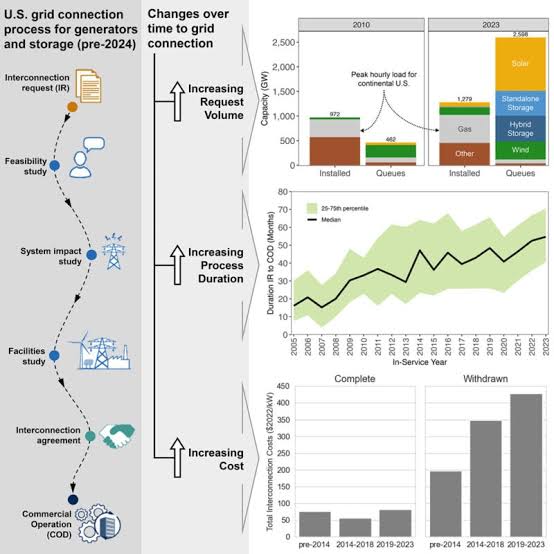
One of the strongest reasons for AI Onsite Power is the difficulty of obtaining new grid capacity quickly.
Large AI facilities can require hundreds of megawatts or more. Connecting such projects may require new substations, transmission upgrades, transformers, and other infrastructure.
The IEA reports that grid-connection queues are long and complex, while new transmission lines in advanced economies can take several years to build.
Recent U.S. reporting also shows that companies are increasingly considering larger onsite systems because utility capacity is taking longer to secure.
For a developer facing a long connection timeline, onsite generation can provide another route to obtaining power.
2. AI Data Centers Need Highly Reliable Electricity
AI workloads are highly dependent on continuous computing.
An interruption can affect servers, networking systems, storage, cooling, and other infrastructure. Although data centers already use backup generators and UPS systems, larger onsite generation can potentially provide a broader source of electricity.
The IEA identifies backup generators and UPS systems as essential components of data-center reliability infrastructure.
With AI Onsite Power, some facilities can potentially combine primary generation, grid electricity, batteries, and backup systems into a more flexible power architecture.
3. Onsite Power Can Add Capacity Faster in Some Situations
Building a new power plant and transmission network is a major infrastructure project.
However, certain onsite generation technologies can be deployed more quickly than large grid upgrades, depending on permitting, fuel availability, equipment supply, and site conditions.
This does not mean onsite generation is always faster or easier. Large projects still require engineering, environmental reviews, equipment, fuel infrastructure, and approvals.
Nevertheless, the possibility of adding power directly at a facility is attractive when grid capacity is constrained.
Recent industry reporting indicates that larger 3–6 MW onsite systems are increasingly being considered by businesses dealing with grid constraints.
4. Natural Gas Is Being Considered for Large AI Loads
Natural gas is becoming an important part of the onsite-power discussion because gas-fired generation can provide dispatchable electricity.
Recent reporting has highlighted a rapid increase in gas-fired power projects associated with U.S. data centers, including projects intended to operate behind the meter.
Natural gas can provide power when solar or wind generation is unavailable, making it useful for facilities that require continuous electricity.
However, this approach also creates environmental concerns. Fossil-fuel generation produces greenhouse-gas emissions, and the long-term use of gas infrastructure can conflict with decarbonization goals.
Therefore, gas-based AI Onsite Power involves a trade-off between rapid, dependable electricity and environmental impact.
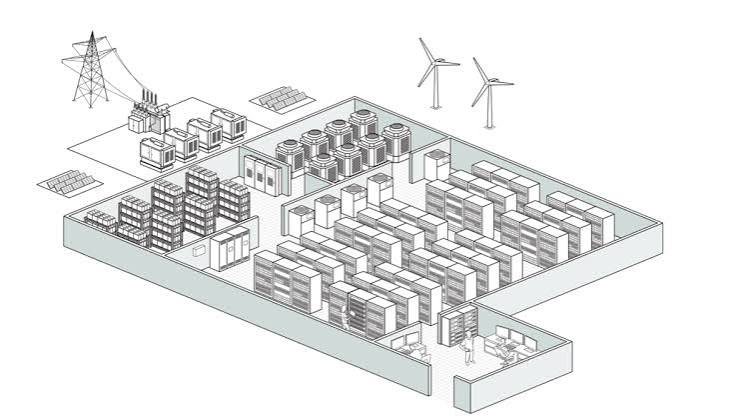
5. Batteries and Microgrids Can Make Onsite Power More Flexible
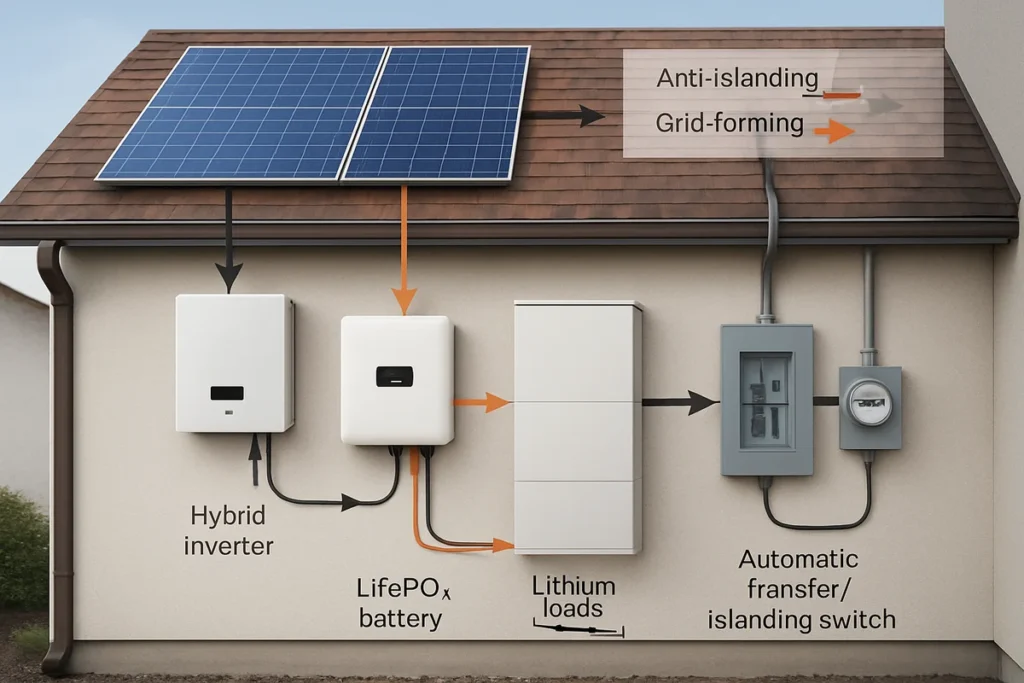
Onsite power does not have to mean one large generator.
A modern data-center microgrid can combine several technologies, including:
- Natural-gas generation
- Solar power
- Battery storage
- Fuel cells
- Grid electricity
- Backup generators
- Energy-management systems
Batteries can be particularly useful because electricity can be stored and released when demand changes.
Morgan Stanley’s 2026 energy outlook identifies microgrids, onsite renewables, fuel cells, battery storage, natural gas, and nuclear power among the technologies being considered for meeting growing AI-related electricity demand.
This combination could make future AI campuses more flexible than facilities that depend on a single electricity source.
6. AI Onsite Power Could Reduce Dependence on a Constrained Grid
A major advantage of AI Onsite Power is that some electricity can be supplied without relying entirely on new transmission capacity.
This can be particularly useful in regions where data-center development is moving faster than grid expansion.
The IEA specifically identifies onsite power generation and storage as potential options for managing data-center electricity demand and reducing pressure from grid constraints.
However, reduced dependence does not necessarily mean complete independence.
Many data centers will still need grid connections for additional capacity, balancing, backup, or future expansion.
7. Power Availability Is Changing Data Center Location Decisions
Electricity is becoming such an important factor that it can influence where AI facilities are built.
Recent Reuters reporting found that European data-center developers are increasingly looking toward areas with cheaper energy, available land, and faster grid connections. New hyperscale facilities planned for 2026–2028 are expected to be located farther from major urban centers than projects developed in previous years.
This represents a significant change in data-center planning.
Instead of simply asking:
“Where is the best land?”
developers increasingly need to ask:
“Where can reliable power be obtained?”
Natural Gas, Batteries and Fuel Cells
The future of AI Onsite Power is unlikely to depend on a single technology.
Natural gas can provide dispatchable electricity, batteries can provide short-duration flexibility, fuel cells can generate electricity at the site, and renewable energy can reduce dependence on fossil fuels.
The IEA expects renewables to provide nearly half of the additional electricity needed for global data-center demand in its base case, while natural gas and nuclear power also contribute.
This suggests that hybrid power systems could become increasingly important.
A data center might therefore use the grid as its primary connection while adding onsite generation and storage to manage capacity shortages and reliability requirements.
AI Onsite Power and the Electricity Grid
It may seem that onsite generation removes data centers from the electricity grid, but the reality is more complicated.
A large facility can still depend on the grid while generating part of its electricity onsite.
In some cases, this can reduce the amount of new grid capacity required immediately. In other cases, however, private generation can create new issues involving fuel supply, emissions, noise, local infrastructure, and electricity-market rules.
There are also concerns that large behind-the-meter gas plants could shift costs or environmental impacts to surrounding communities.
For that reason, regulators and utilities will need to determine how onsite power should be integrated into wider energy systems.
Benefits and Challenges of AI Onsite Power
| Factor | Potential Benefit | Possible Challenge |
|---|---|---|
| Grid connection | Less dependence on immediate new capacity | Grid connection may still be required |
| Reliability | Additional power sources can improve resilience | Complex systems can introduce new failure points |
| Speed | Some systems can be deployed faster than major grid upgrades | Permits and equipment can still cause delays |
| Natural gas | Dispatchable electricity | Greenhouse-gas emissions |
| Batteries | Fast response and energy storage | Large-scale storage can be expensive |
| Solar power | Lower operational emissions | Variable generation |
| Fuel cells | Onsite electricity generation | Technology and fuel costs |
| Microgrids | Multiple sources can be coordinated | More complex engineering |
AI Onsite Power: Current Data Center Scale
The scale of AI power demand helps explain why onsite generation is receiving so much attention.
| Data Center Type | Approximate Power Scale |
|---|---|
| Traditional data center | 10–25 MW |
| Hyperscale AI-focused center | 100+ MW |
| Largest facilities under construction | Up to around 2,000 MW |
| Largest planned facilities referenced by IEA | Up to around 5,000 MW |
The IEA notes that traditional data centers can use around 10–25 MW, while hyperscale AI centers can exceed 100 MW. It also identifies facilities under construction at around 2,000 MW and planned facilities at up to 5,000 MW.
These figures refer to facility capacity scales and should not be interpreted as typical electricity consumption for every data center.
Graph Idea: AI Onsite Power Growth
For your article, a conceptual infographic would work better than inventing a historical statistics graph.
AI Data Center Power Strategy
Grid Power
↓
Grid Connection Delays
↓
Onsite Generation
↓
Battery Storage + Microgrid
↓
Reliable AI Power
You can also create a visual comparison showing:
Grid Only → Grid + Onsite Power → Hybrid Microgrid
This would explain the concept without using unsupported statistics.
Relevant Internal Link Opportunities
If you already have related articles on your website, these would be natural places for internal links:
AI Gigawatt Data Centers — link from the section discussing massive AI electricity requirements.
AI Data Center Energy — link from the introduction or power-demand section.
AI Energy Consumption — link where global electricity demand is discussed.
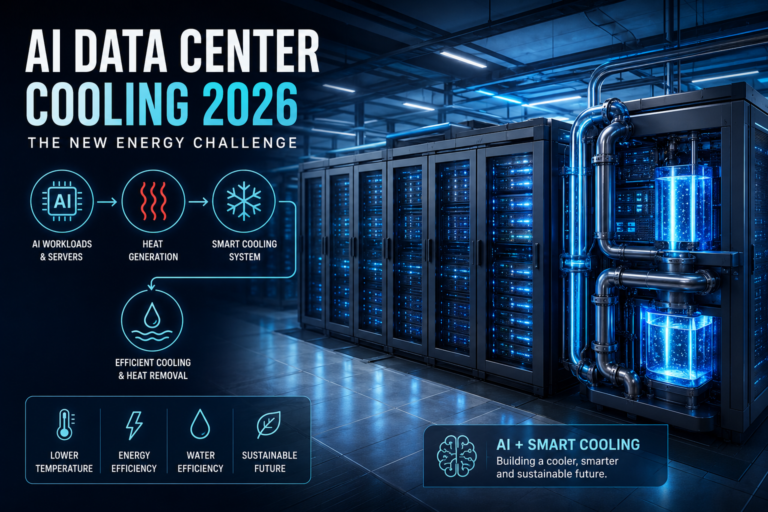
AI Data Center Cooling — link when explaining that electricity is also required for cooling infrastructure.
AI Renewable Energy — link from the section discussing solar and other renewable sources.
Only add these links if the corresponding articles already exist on your website.
Is AI Onsite Power the Future of Data Centers?
Onsite power is likely to become an important part of the data-center energy mix, but it will not necessarily replace the electricity grid.
Some facilities may use onsite generation because grid capacity is unavailable. Others may use it for backup power, peak management, or additional capacity.
The most practical model could be a hybrid energy system in which grid electricity is combined with onsite generation, batteries, renewable energy, and advanced energy-management software.
The exact combination will depend on local electricity prices, regulations, fuel availability, grid capacity, environmental requirements, and the size of the AI facility.
Frequently Asked Questions About AI Onsite Power
What Is AI Onsite Power?
AI Onsite Power is electricity generated or stored at or near an AI data center instead of relying entirely on the traditional utility grid.
Why Are Data Centers Building Their Own Power Systems?
The main reasons include grid-connection delays, limited electricity capacity, reliability requirements, and rapidly increasing AI computing demand. Recent reporting confirms that larger onsite systems are being considered as grid constraints increase.
What Energy Sources Can Be Used for AI Onsite Power?
Natural gas, fuel cells, solar power, batteries, microturbines, and other distributed-generation technologies can be used. Some facilities may combine several technologies into a microgrid.
Does Onsite Power Mean a Data Center Is Off the Grid?
Not necessarily. Many onsite systems are designed to work alongside the utility grid rather than completely replace it.
Is AI Onsite Power Environmentally Friendly?
It depends on the technology. Solar, batteries, and some low-carbon generation options can reduce emissions, while natural-gas generation still produces greenhouse gases. The environmental impact therefore depends on the specific power mix.
Can Onsite Power Solve the AI Electricity Problem?
It can help address some grid-connection and capacity challenges, but it is not a complete solution. Large-scale AI growth will still require generation, transmission, storage, and grid investment.
Will AI Data Centers Use More Onsite Power in the Future?
Onsite and behind-the-meter power are receiving increasing attention because AI electricity demand is growing while grid infrastructure can take years to expand. The IEA identifies onsite generation and storage as potential tools for managing these constraints.
Conclusion
AI Onsite Power is emerging as an important response to one of the biggest challenges facing artificial intelligence: securing enough reliable electricity.
As AI data centers become larger and more power-intensive, waiting for traditional grid infrastructure can create delays. Onsite generation, batteries, fuel cells, renewable energy, and microgrids can provide additional options for facilities that need power quickly and reliably.
However, building private power systems also creates challenges involving emissions, cost, fuel supply, reliability, regulation, and community impact. Recent reporting has shown both the growing interest in onsite systems and the risks associated with moving too quickly toward off-grid solutions.
The future is therefore unlikely to be simply “data centers versus the grid.” Instead, the next generation of AI infrastructure may depend on a combination of grid power, onsite generation, renewable energy, batteries, and intelligent microgrids.